Bahrain National Museum
Galleries on Dilmun, burial mounds, traditional trades and customs, on the waterfront.

Home›Culture›Timeline›Bahrain: History and Culture
Bahrain
Bahrain history begins with Dilmun, the Bronze Age trading civilization that the Sumerians called a land of paradise, and continues through centuries of pearling. Bahraini culture is open, cosmopolitan and gracious, a perfect introduction to the Gulf.
At a glance
Eras of Bahrain history
Around 2000 BC, Bahrain was the heart of Dilmun, a trading hub linking Mesopotamia with the Indus Valley. Its sweet springs and date groves gave rise to legends of an island of eternal life, and the Epic of Gilgamesh mentions it. Thousands of Dilmun burial mounds, a World Heritage Site, still dot the landscape, and the Barbar Temple is one of the oldest in the Gulf.
Greek writers knew the island as Tylos, famous for pearls and cotton. Bahrain embraced Islam early, in the 7th century, and the Al Khamis Mosque, among the oldest in the region, has twin minarets that are a local landmark. Qal'at al-Bahrain, the Bahrain Fort, sits on a mound built up over four thousand years of settlement.
The Al Khalifa family has ruled since 1783. Pearling made Bahrain wealthy until the 1930s, when it became the first place on the Arab side of the Gulf to strike oil, in 1932. Independence came in 1971. Today Bahrain Economic Vision 2030 focuses on finance, technology and tourism. See the royal family of Bahrain, pearling in the Gulf and Bahrain Economic Vision 2030.
Languages and five useful
Bahraini Arabic is a Gulf dialect, Persian and Urdu are also heard, and English is very widely spoken.
| English | Local phrase | Say it like |
|---|---|---|
| Hello | As-salamu alaykum | ah-sah-LAH-moo ah-LAY-koom |
| Welcome | Marhaba | MAR-ha-ba |
| Thank you | Shukran | SHOOK-ran |
| How are you? | Shlonik? | SHLOH-nik |
| Enough, thank you (coffee) | Bas, shukran | bass SHOOK-ran |
Muharraq's old houses, with wind towers called barjeel and carved wooden doors, line the Pearling Pathway, a 3.5-kilometer heritage trail linking merchants' homes, a seashore and oyster beds. Bahraini craftsmen still weave baskets in Karbabad, throw pottery in A'ali and weave cloth in Bani Jamra.
Music includes fijiri, the haunting songs of pearl divers, and Bahrain has a lively contemporary art scene, with galleries in Adliya and the annual Spring of Culture festival. The Bahrain National Theatre stages concerts and performances. See the region's wider music traditions.
Machboos, spiced rice with chicken or fish, is the national dish. Muhammar, sweet rice cooked with date syrup, is traditionally served with grilled fish, and harees, wheat and meat cooked to a smooth porridge, appears during Ramadan and celebrations. Balaleet, sweet vermicelli topped with an omelet, is a favorite breakfast.
Bahraini halwa, a glossy, saffron-scented sweet sold in Manama souk, makes a lovely gift. Coffee spiced with cardamom and dates are offered to every guest. Seafood is a point of pride: hamour, a local grouper, and safi, rabbitfish, are grilled or fried and served with rice and a tangy sauce in seaside restaurants. Read about Arabic coffee and dates.
Galleries on Dilmun, burial mounds, traditional trades and customs, on the waterfront.
A World Heritage Site with layers from the Dilmun era to the Portuguese-era fort, plus a site museum.
A heritage trail through restored merchants' houses and the Pearling Path visitor center.
A museum of Qur'an manuscripts and Islamic calligraphy.
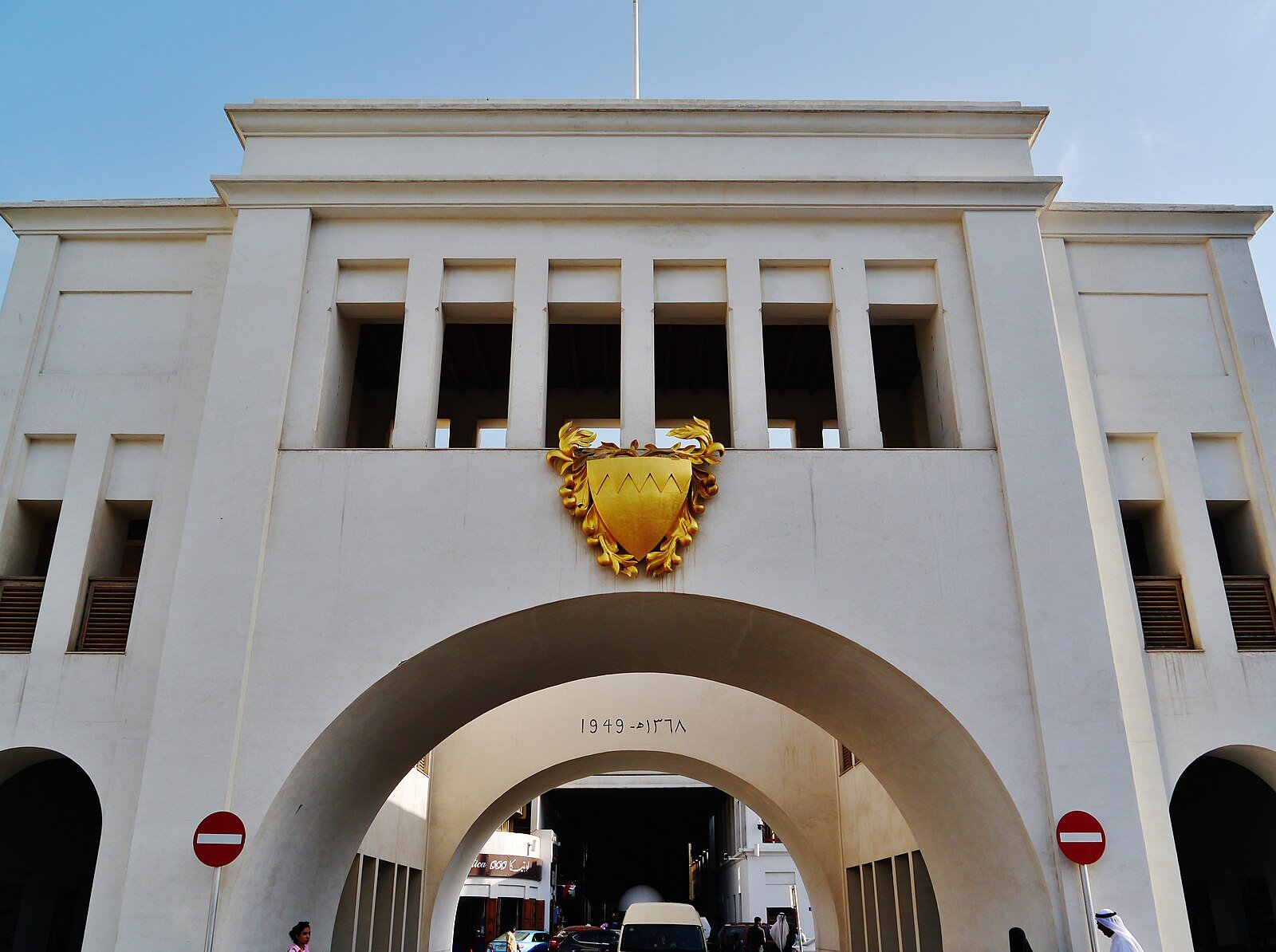
The historic gateway and the market for spices, gold, textiles and perfumes.
Bahrainis are known for their warmth and openness. Ramadan brings the girgaoon children's festival, majlis evenings and late-night markets, and the fishing heritage lives on in the wooden dhows of Muharraq. Weddings are joyful multi-day affairs with henna nights and traditional songs, and on Fridays families gather for long lunches of machboos. The island's natural springs, once famous across the Gulf, are remembered in place names and old stories, and the dhow-building yards of Muharraq still turn out wooden boats by hand. Learn about Arab hospitality and the majlis.
Bahrain is an archipelago of more than thirty islands. The Tree of Life, a lone mesquite in the desert, has survived for some four hundred years with no visible water source. Bahrain hosted the first Formula 1 race in the Middle East, in 2004. Plan your trip with our Bahrain luxury travel guide and our page on Manama's hotels.
Ultra-Luxury Real Estate · Own Here
The places you discover as a guest are the places to own. Freehold zones for foreign buyers since 2001.
Ultra-Luxury Tourism & Ultra-Luxury Real Estate
Checked October 2026. Prices and dates are approximate and can change. See our standard.