Luxury Real Estate
Freehold ownership in designated areas of the UAE, Qatar, Bahrain and Oman, and since January 2026 in designated zones of Saudi Arabia. Our market guides cover who can buy, where, prices and fees.
Our guide →
Home›Luxury Real Estate›Invest in the Middle East
Luxury Real Estate · Investment
The Gulf has opened its doors to foreign investors as never before: property ownership, full ownership of companies, stock markets open to the world and long-term residency for those who invest. Here is every route, country by country, led by Saudi Arabia, the United Arab Emirates, Qatar, Kuwait and Bahrain.
Updated
At a glance
Why the world is
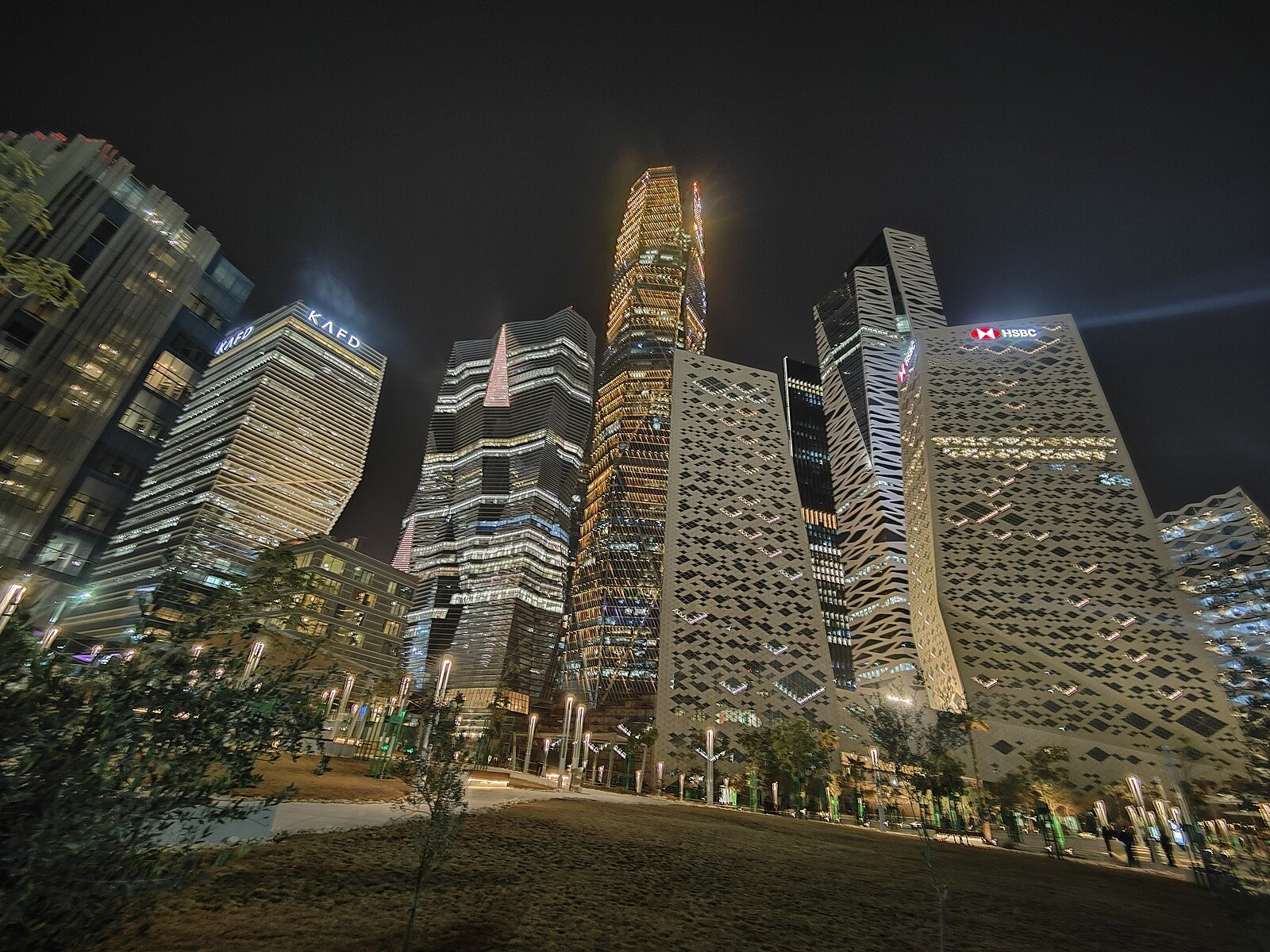
Few regions have changed as quickly. Each Gulf state has a national plan to grow beyond oil, from Saudi Vision 2030 to Dubai's D33 agenda, Qatar National Vision 2030, Kuwait Vision 2035 and Bahrain Economic Vision 2030. To deliver them, governments have rewritten the rules for outsiders: foreigners can now own property, hold companies outright and trade on local stock exchanges in ways that were not possible a decade ago.
The foundations are strong. Most Gulf currencies are pegged to the US dollar, which removes currency risk for American investors. There is no personal income tax in the Gulf states, and corporate taxes are low by world standards. Some of the world's largest sovereign wealth funds invest alongside private capital, and a calendar of global events, from Expo 2030 in Riyadh to the 2034 FIFA World Cup, is driving a generation of building. See The Visions and Amazing Things Being Built.
Most investors combine two or three of these: a home, a company or a portfolio, and the residency that comes with them.
Freehold ownership in designated areas of the UAE, Qatar, Bahrain and Oman, and since January 2026 in designated zones of Saudi Arabia. Our market guides cover who can buy, where, prices and fees.
Our guide →Saudi Arabia, the UAE, Qatar, Kuwait and Bahrain now allow up to 100% foreign ownership in most sectors, with a short list of strategic activities kept for local partners or special approval.
Dedicated business zones with their own rules, such as the Dubai International Financial Centre (DIFC), Abu Dhabi Global Market (ADGM), the Qatar Financial Centre and Saudi Arabia's special economic zones, offer full foreign ownership, English common-law courts in some cases, and tax benefits.
Saudi Arabia's Tadawul, the Dubai Financial Market, the Abu Dhabi Securities Exchange, the Qatar Stock Exchange, Boursa Kuwait and Bahrain Bourse are open to foreign investors through licensed brokers, subject to foreign ownership limits for each company.
Long-term residency follows investment: the UAE golden visa, Saudi Premium Residency, Qatar's property residency, Bahrain's Golden Residency, Oman's investor residency and Kuwait's new 15-year investor residency.
Our guide →Governments invite private partners into tourism, infrastructure, housing and technology, through public-private partnership programs and the developers behind the giga-projects.
Our guide →Five lead markets at a glance
| Saudi Arabia | UAE | Qatar | Kuwait | Bahrain | |
|---|---|---|---|---|---|
| Property for foreigners | Designated zones in Riyadh, Jeddah and AlUla; zones in Makkah and Madinah for Muslim individuals | Freehold in designated areas of Dubai, Abu Dhabi, Ras Al Khaimah and other emirates | Freehold or 99-year usufruct in designated areas such as The Pearl and Lusail | Mainly reserved for Kuwaitis and GCC citizens; foreign investors take part through listed companies and real estate funds | Freehold in designated zones such as Bahrain Bay, Amwaj Islands and Diyar Al Muharraq |
| Company ownership | Up to 100% in most sectors, registered with the Ministry of Investment | Up to 100% in most mainland activities since 2021, and in the free zones | Up to 100% in most sectors with Ministry of Commerce approval | Up to 100% with a KDIPA license | Up to 100% in most sectors |
| Stock market | Tadawul, open to all foreign investors since February 2026 | Dubai Financial Market and Abu Dhabi Securities Exchange | Qatar Stock Exchange | Boursa Kuwait | Bahrain Bourse |
| Residency by investment | Premium Residency: home from SAR 4 million (about $1.07 million) | Golden visa: property from AED 2 million (about $545,000) | Property from QAR 730,000 (about $200,000); QAR 3.65 million for permanent-residency benefits | Up to 15 years for KDIPA-licensed investors | Golden Residency: property from BHD 130,000 (about $345,000) |
| Corporate tax | 20% on the foreign-owned share of profits | 9% above AED 375,000; 0% on qualifying free-zone income | 10% | 15% on foreign companies' Kuwaiti profits | No general corporate income tax (oil and gas excepted) |
| Personal income tax | None | None | None | None | None |
Largest opportunity
Saudi Arabia is the region's largest economy and the center of its boldest building program. Two reforms in 2026 changed the picture for foreigners. The Non-Saudi Real Estate Ownership Law took effect on January 22, 2026, and in June the government published the designated zones: 57 in Jeddah, 9 in Riyadh, 17 in AlUla, and zones in Makkah and Madinah open to Muslim individuals. On February 1, 2026, the Saudi Exchange opened its Main Market directly to all categories of foreign investors.
For companies, the Investment Law that took effect in 2025 lets foreign investors register with the Ministry of Investment and own businesses outright in most sectors. International companies that base their regional headquarters in Riyadh receive a 30-year tax relief on qualifying activities, and four special economic zones (King Abdullah Economic City, Ras Al Khair, Jazan and a cloud computing zone in Riyadh) offer their own incentives. The giga-projects, among them NEOM, Red Sea Global, Diriyah, Qiddiya and New Murabba, are where many of the partnership opportunities lie. Read our Saudi Arabia Luxury Real Estate and Premium Residency guide.
Most open market
The UAE is the region's most established destination for international capital. Foreigners have bought freehold homes in Dubai for more than two decades, and since 2021 the mainland has allowed full foreign ownership of most businesses. Dozens of free zones serve every industry, and the DIFC in Dubai and ADGM in Abu Dhabi are home to banks, funds and family offices from around the world.
A property purchase of AED 2 million or more can lead to a 10-year golden visa for the whole family. Corporate tax is 9% on profits above AED 375,000, with 0% on qualifying free-zone income. See Dubai Luxury Real Estate, Abu Dhabi Luxury Real Estate, Ras Al Khaimah Luxury Real Estate and private banks and family offices.
Doha's waterfront
Qatar allows foreign investors up to 100% ownership in most sectors with Ministry of Commerce approval. The Qatar Financial Centre offers full foreign ownership, full repatriation of profits and a 10% tax on locally sourced profits, while the Qatar Free Zones offer long tax holidays for industry and logistics.
Foreigners can buy freehold homes at The Pearl, Lusail and other designated areas. Property worth QAR 730,000 brings residency, and QAR 3.65 million brings permanent-residency benefits. See Qatar Luxury Real Estate at The Pearl and Qatar National Vision 2030.
New welcome for investors
Kuwait has one of the world's oldest sovereign wealth funds and a strong financial tradition. Its Direct Investment Promotion Authority (KDIPA) can license foreign companies with up to 100% ownership, and in June 2026 Kuwait introduced residency of up to 15 years for KDIPA-licensed investors and their senior executives. Boursa Kuwait is open to foreign investors through licensed brokers.
Home ownership remains largely reserved for Kuwaitis and GCC citizens, so international investors take part in property through listed companies and real estate funds. Read our full Kuwait investment guide.
Easy entry and strong yields
Bahrain has offered freehold zones to foreigners since 2001 and allows full foreign ownership in most sectors. It has no general corporate income tax, a long banking tradition and a causeway to Saudi Arabia, which makes it a natural base for companies serving the Saudi market.
Property worth BHD 130,000 or more brings a 10-year Golden Residency. See Bahrain property and Golden Residency and Bahrain Economic Vision 2030.
| Market | Property for foreigners | Residency or citizenship | Our guide |
|---|---|---|---|
| Oman | Freehold in Integrated Tourism Complexes and approved zones | Investor residency from OMR 200,000 (about $520,000) | Oman Luxury Real Estate |
| Egypt | Generally up to two homes for personal use | Residency from about $50,000; citizenship route from $300,000 | Egypt Luxury Real Estate |
| Morocco | Freehold on most residential property | Long-stay residence by application | Morocco Luxury Real Estate |
| Türkiye | Open to US citizens outside restricted zones | Citizenship with property from $400,000, held 3 years | Istanbul Luxury Real Estate |
| Cyprus | Permit for non-EU buyers, generally for up to two homes | Permanent residency with a new home from €300,000 plus VAT | Cyprus Luxury Real Estate |
| Israel | Generally open; often a long lease from the Israel Land Authority | Not linked to property | Israel Luxury Real Estate |
| Jordan | Permit for each property; not in border or historical areas | Investor residency by application | Jordan Luxury Real Estate |
| Lebanon | Up to 3,000 sq m without a decree | Residency by application | Lebanon Luxury Real Estate |
| Tunisia | Homes with the governor's authorization; no farmland | Residency by application | Tunisia Luxury Real Estate |
Country by country, with all fourteen markets: Can foreigners buy property in the Middle East?
The landmark projects reshaping the region, and the property and business opportunities around them.
Two global events driving hotels, transport, stadiums and new districts across the Kingdom.
Our guide →Luxury resorts on the Red Sea coast and at Amaala, with an international airport already open.
Our guide →The birthplace of the Saudi state, becoming a district of hotels, homes, museums and dining around the UNESCO-listed At-Turaif.
Our guide →A city of entertainment, sport and culture, with Six Flags Qiddiya City and Aquarabia already open.
Our guide →A new downtown for Riyadh planned around a landmark cube about 400 meters high.
Our guide →A seafront district and a tower planned at more than 1,000 meters, with construction under way since 2025.
Our guide →The Louvre Abu Dhabi, the Zayed National Museum and the Guggenheim Abu Dhabi, opening December 11, 2026, surrounded by prime homes.
Our guide →A landmark integrated resort lifting demand on Al Marjan Island and the wider emirate.
Our guide →Some of the world's largest AI campuses and data-center programs, open to international technology partners.
Our guide →Investor registration, sector guides and incentives.
Official site ↗Rules and the map of designated zones for non-Saudi ownership.
Official site ↗Market rules and listed companies.
Official site ↗Property registration and the official record of Dubai sales.
Official site ↗Dubai's financial free zone.
Official site ↗Abu Dhabi's international financial center.
Official site ↗Qatar's investment promotion agency.
Official site ↗Licensing for financial and professional firms in Doha.
Official site ↗Licenses for foreign-owned companies and investor residency.
Official site ↗Bahrain's investment promotion agency.
Official site ↗First, decide what you want: a home and residency, a business presence, a portfolio, or a stake in a project. Second, choose the market and visit; our country guides and business travel guide help you plan. Third, appoint a licensed lawyer and, for property, a licensed agent; see prime Luxury Real Estate agencies. Fourth, open a local bank account and register with the right authority. Fifth, apply for residency once the investment is complete.
If you would like us to point you to the right firms, register your interest and tell us what you are looking for.
Yes. Foreigners can own companies in most sectors, buy property in designated zones since January 2026, and trade directly on the Saudi Exchange since February 2026.
The UAE has the longest track record, with freehold property, full company ownership and many free zones. Bahrain offers low entry thresholds. Saudi Arabia offers the largest market and the biggest projects.
Yes, in designated areas of the UAE, Saudi Arabia, Qatar, Bahrain and Oman. In Kuwait, property is mainly reserved for citizens and GCC nationals.
There is no personal income tax in Saudi Arabia, the UAE, Qatar, Kuwait, Bahrain or Oman. Companies pay corporate tax at rates set by each country.
Yes. The UAE, Saudi Arabia, Qatar, Bahrain, Oman and Kuwait all offer long-term residency linked to property or business investment. See residency and golden visas.
The Saudi riyal, UAE dirham, Qatari riyal, Bahraini dinar and Omani rial are pegged to the US dollar. The Kuwaiti dinar is pegged to a basket of currencies.
Ultra-Luxury Tourism · Stay Here
Many of the region's most significant buyers first arrive as guests. Start with the finest hotels, resorts and private villas in the Middle East.
Ultra-Luxury Tourism & Ultra-Luxury Real Estate
Three ways to buy
Not every buyer arrives on vacation. Whichever way you buy, every buyer is pointed to a licensed Luxury Real Estate Agency or Developer in the Territory.
Many buyers discover a place as guests, return to view homes in person and buy on a later visit. Our guides to resorts, flights and cities help plan the journey.
Many international buyers own before they ever visit. They view homes and projects by video and virtual tour, work with a licensed agency, developer and lawyer, and sign and pay from home, often through a power of attorney where the law allows.
Funds, family offices and companies buy whole floors, buildings and portfolios. Tell us your mandate and we will point you to developers and agencies with the scale and investor relations to match.
Rules for foreign buyers differ by country and change over time; confirm them with a lawyer before you commit. Leading Luxury Real Estate law firms and lenders, country by country. Register your interest.
Thinking of buying? Tell us what you are looking for and we will point you to the right people.
Register interestThis page is general information to help you start your research. It is not financial, legal, tax or immigration advice. Rules, prices and thresholds change; confirm every detail with a licensed adviser and the official authority before you act.
Checked October 2026. Prices and dates are approximate and can change. See our standard.
Our Sister Site
Many of the region’s leading agencies and developers also work across the Mediterranean, from Greece and Italy to the Riviera and Spain. Our sister site, TheMediterranean.com, has its own Founding Partner program, built the same way: three Agencies and three Developers in each Territory, and never more.
Looking for a home on the Mediterranean? TheMediterranean.com points you to its own Founding Partners.