Persepolis
The Achaemenid ceremonial capital, with carved staircases, monumental gateways and royal tombs nearby.

Home›Destinations›Iran
Iran
Persepolis, the ceremonial capital of the Achaemenid kings, is the doorway to one of the world's richest cultures. From the blue-tiled squares of Isfahan to Persian gardens, poetry, carpets and cuisine, Iran's heritage has shaped art and architecture from India to the Mediterranean.
At a glance
City of kings
Begun by Darius the Great around 518 BCE on a vast stone terrace near today's Shiraz, Persepolis was the stage for the Achaemenid Empire's grandest ceremonies. Its staircases are carved with processions of delegations from across the known world, bearing gifts of gold, textiles and animals: a portrait in stone of an empire that stretched from Egypt to the Indus.
The Gate of All Nations, the columns of the Apadana audience hall and the royal tombs cut into the cliffs at nearby Naqsh-e Rostam remain among the most impressive monuments of the ancient world. Nearby Pasargadae holds the simple, moving tomb of Cyrus the Great. For the longer story, see Iran history and culture.
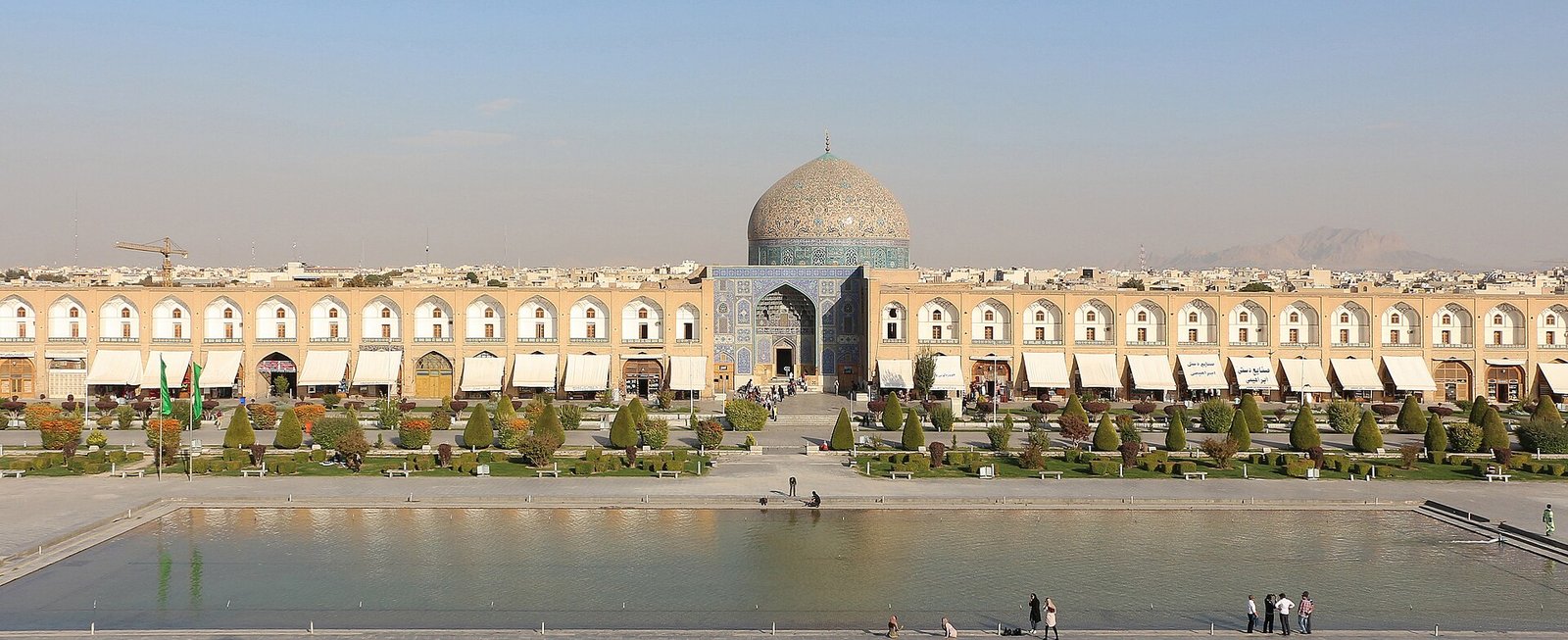
A Persian saying calls Isfahan "half the world," and its great square, Naqsh-e Jahan, explains why. Laid out under Shah Abbas I around 1600, it is framed by the Shah Mosque with its turquoise dome, the exquisite Sheikh Lotfollah Mosque, the Ali Qapu palace and the entrance to the Grand Bazaar.
Elsewhere in the city, the Friday Mosque traces nine centuries of Islamic architecture, and the historic bridges over the Zayandeh River, Si-o-se-pol and Khaju, are graceful works of engineering and gathering places at dusk.
Iran's great UNESCO heritage
A selection of the World Heritage treasures that make Iran one of the most culturally rich countries on earth.
The Achaemenid ceremonial capital, with carved staircases, monumental gateways and royal tombs nearby.
One of the largest city squares in the world, surrounded by Safavid masterpieces.
The first Achaemenid capital and the tomb of Cyrus the Great.
A desert city of mud-brick lanes, windcatchers and ancient underground water channels.
Gardens such as Eram in Shiraz and Fin in Kashan, designed as earthly images of paradise.
A Qajar-era palace complex of mirror halls and tiled courtyards in the heart of the capital.
An Elamite ziggurat more than 3,000 years old, among the best preserved anywhere.
An ancient adobe citadel on the Silk Road, surrounded by date groves and qanats.
One of the oldest and largest covered bazaars in the world, a Silk Road trading hub.
Ancient waterworks of canals, mills and waterfalls, a feat of engineering.
Persian gardens
The Persian garden, divided into four by flowing water, is one of Iran's gifts to the world, echoed later in the Alhambra and the Taj Mahal. The word paradise itself comes from an Old Persian word for a walled garden.
Poetry is woven into daily life. Ferdowsi's Shahnameh, the Book of Kings, preserved the Persian language and its legends; the verses of Hafez and Saadi are recited by heart, and the tombs of both poets in Shiraz are peaceful gardens visited by admirers at all hours. Rumi and Omar Khayyam are read around the world.
Persian carpets, woven in Tabriz, Kashan, Isfahan, Qom and Kerman, are prized for their density and design, and the art of carpet weaving in Fars and Kashan is recognized by UNESCO. Miniature painting, calligraphy, enamel work and the mirror mosaic called ayeneh-kari continue in workshops today. For the present-day capital's collections, see Tehran's museums and palaces.
Cities of culture
Shiraz, the city of poets and roses, is home to the tombs of Hafez and Saadi, the Eram Garden and the Nasir al-Mulk Mosque, whose stained-glass windows fill its prayer hall with colored light each morning. It is also the gateway to Persepolis and Pasargadae.
Yazd, one of the oldest continuously inhabited cities on earth, is a labyrinth of mud-brick lanes topped by windcatchers, the ingenious towers that draw cool air into homes. It is a center of Zoroastrian heritage, with fire temples that have burned for centuries. Kashan, on the edge of the desert, is known for its elegant nineteenth-century merchant houses, the Fin Garden and its rosewater festival each spring.
Domes, tiles and light
Persian architects perfected the double-shelled dome, the iwan, a vaulted hall open on one side, and the muqarnas, the honeycomb vaulting that seems to dissolve stone into light. Glazed tilework, from the deep cobalt of the Safavid era to the rose-pink tiles of the Qajar period, turned mosques and palaces into living works of art.
Equally remarkable is the engineering behind daily life: qanats, underground channels that carried water across the desert for miles, yakhchals that stored ice through the summer, and windcatchers that cooled homes long before air conditioning. The Persian qanat is itself inscribed as a UNESCO World Heritage Site.
Persian cooking balances sweet and sour with herbs, saffron, dried limes, pomegranate and rosewater. Saffron-crowned rice with its prized golden crust, tahdig, is the center of the table, served with slow-cooked stews such as ghormeh sabzi and fesenjan with walnuts and pomegranate.
Kebabs, flatbreads straight from the oven, fresh herbs and cheese, pistachios, and desserts such as saffron ice cream and faloodeh complete a cuisine admired far beyond its borders.
Along the Gulf, island communities kept their own traditions of seafaring, trade and architecture. Kish Island is known for its ancient underground water channels and the old town of Harireh. For neighboring heritage across the water, see Iraq heritage travel and the region's shared stories on our Culture pages.
Nowruz, the Persian New Year at the spring equinox, is celebrated across a wide region, from the Caucasus to Central Asia, and is inscribed by UNESCO. Families set a haft-sin table of seven symbolic items, visit relatives and spend the thirteenth day outdoors in nature. Yalda, the longest night of the year, is marked with pomegranates, watermelon and readings of Hafez.
Ultra-Luxury Real Estate · Own Here
Across the Middle East, the finest resorts and the finest homes now sit side by side, and many international buyers own before they ever visit.
Ultra-Luxury Tourism & Ultra-Luxury Real Estate
Checked October 2026. Prices and dates are approximate and can change. See our standard.