Divan Erbil
A modern tower with a large spa and views over the city, one of Erbil's top business and leisure addresses.
Official site ↗
Home›Destinations›Iraq
Iraq
Iraq heritage travel is a journey to where cities, writing and law began: the walls of Babylon, the great ziggurat of Ur and the citadel of Erbil, inhabited for some 6,000 years. This guide covers the best hotels in Erbil and Baghdad, visa basics and the things to do in Iraq for first-time visitors.
Updated
At a glance
From the United States
The essentials for American travelers, at a glance.
Checked October 18, 2026. Rules and schedules change, so confirm on the official portal before you book. Connecting on a Gulf or Turkish carrier? See stopover programs, and plan with your first trip.
Land between the rivers
Ancient Mesopotamia, the land between the Tigris and the Euphrates, gave the world its first cities, the wheel, cuneiform writing and the Epic of Gilgamesh. Sumer, Akkad, Assyria and Babylon all rose here, followed by the Abbasid caliphate, whose Baghdad was for centuries the greatest center of learning on earth.
Iraq today counts six UNESCO World Heritage Sites, including Babylon, the Erbil Citadel, the ancient city of Hatra, Ashur, Samarra and the Ahwar, the southern marshes with the relict cities of Ur, Uruk and Eridu. Rebuilding and new investment are reshaping the country; see Iraq Vision 2030 and the Development Road, and read the full story in Iraq history and culture.
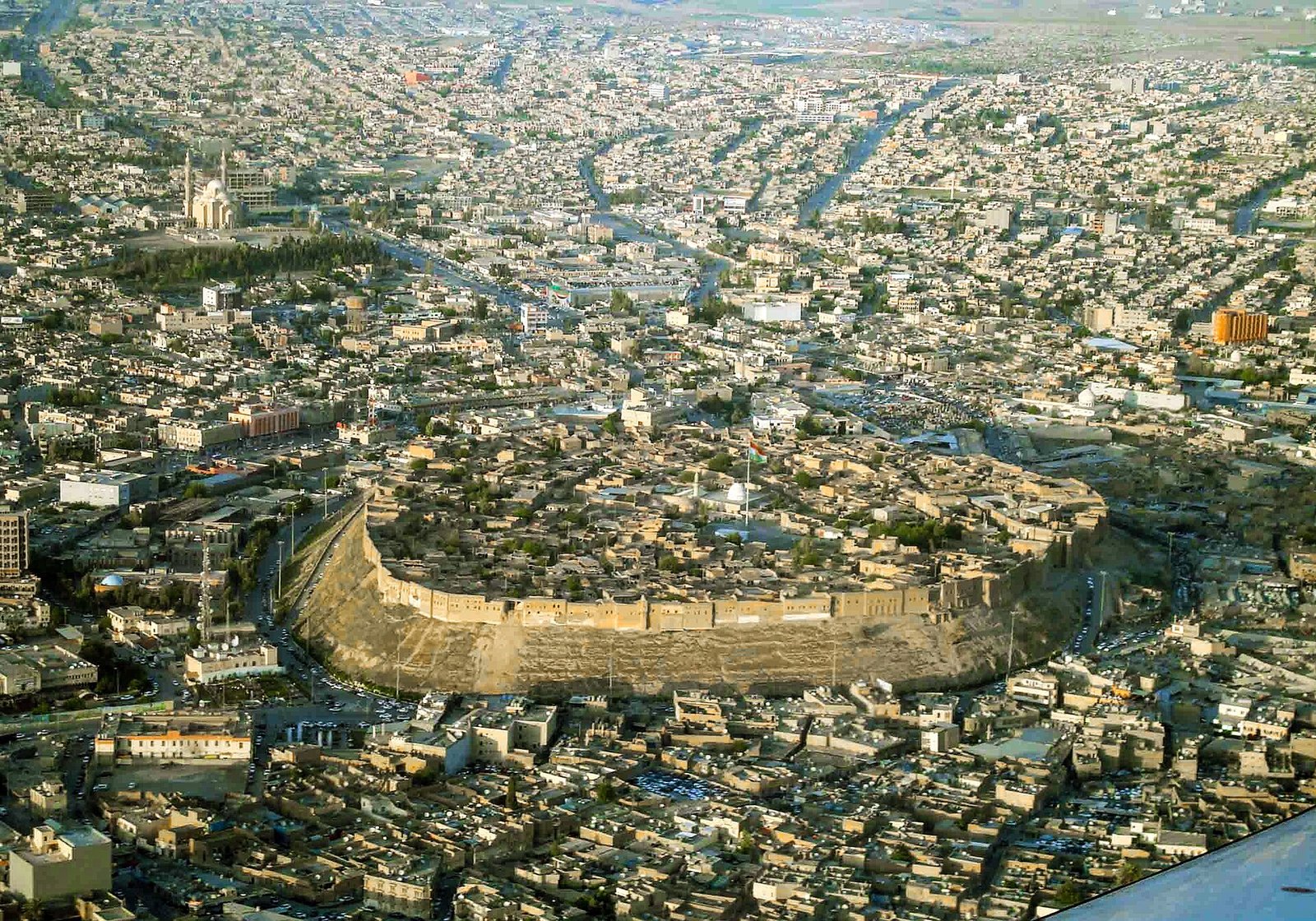
The Kurdistan Region in the north is the most visited part of the country, with its own airports, visa rules and a growing hotel scene. Its capital, Erbil, centers on a citadel mound that is among the oldest continuously inhabited places in the world. Sulaymaniyah is known for its arts, bazaars and mountain setting, and the valleys of Duhok and the Rawanduz gorge offer some of the region's finest scenery.
Baghdad, the capital, holds the Iraq Museum, home to one of the world's great collections of Mesopotamian art, along with the Abbasid Palace and the booksellers of Al-Mutanabbi Street. To the south lie Babylon near Hillah, the holy cities of Najaf and Karbala, the Ziggurat of Ur near Nasiriyah, the marshes of the Ahwar, and the port city of Basra on the Shatt al-Arab.
Best hotels in Erbil
Iraq's leading international hotels. Choices outside the major cities are simpler.
A modern tower with a large spa and views over the city, one of Erbil's top business and leisure addresses.
Official site ↗A long-established five-star in the city center with a pool, gardens and dependable service.
Official site ↗Spacious suites and apartments, ideal for longer stays and families.
Official site ↗A landmark tower with mountain and city views, the city's leading international hotel.
Official site ↗A Baghdad landmark on the banks of the Tigris, with gardens and international dining.
Official site ↗| From | Route | Airlines | Approx. total time |
|---|---|---|---|
| New York JFK | Via Doha, Dubai, Abu Dhabi or Istanbul | Qatar Airways, Emirates, Etihad, Turkish Airlines | 15h to 18h |
| Washington Dulles / Chicago | Via Doha, Istanbul or Dubai | Qatar Airways, Turkish Airlines, Emirates | 16h to 19h |
| Los Angeles / Houston | Via Doha, Istanbul or Dubai | Qatar Airways, Turkish Airlines, Emirates | 19h to 22h |
Visa: for federal Iraq, including Baghdad and the south, US passport holders must obtain an eVisa through Iraq's official portal before travel; visa on arrival was discontinued in 2025. The Kurdistan Region issues visas to US citizens on arrival at Erbil and Sulaymaniyah airports, valid for the Kurdistan Region only. Rules can change, so confirm before you book. There are no nonstop flights from the US; connect through a Gulf hub or Istanbul.
Most visitors travel with a reputable specialist tour operator, which handles permits, drivers and guides for the heritage sites. Dress conservatively: long trousers and sleeves for everyone, and a headscarf and abaya for women at shrines (often provided). Alcohol is restricted and best avoided outside a few licensed hotel bars in Kurdistan. During Ramadan (expected to begin around February 8, 2027), eat and drink discreetly in daytime.
Money: Iraq is largely a cash economy, and US dollars are widely accepted. A five-star room in Erbil runs from about $180 a night (about IQD 235,000); a private guided day at Babylon from about $250.
Things to do
Walk the restored lanes of the Erbil Citadel and its Textile Museum, then browse the Qaysari Bazaar below. In Baghdad, spend a morning in the Iraq Museum's Assyrian and Sumerian galleries and an evening along the Tigris. Stand before the reconstructed Ishtar Gate and processional way at Babylon, climb the steps of the Ziggurat of Ur, and glide by canoe through the reed villages of the marshes.
Iraqi cuisine is a feast: masgouf, river carp grilled over an open fire; dolma; kleicha date cookies; and strong cardamom tea served everywhere.
Day one and two: arrive in Erbil and settle into a five-star hotel. Spend the first evening walking the citadel ramparts as the lights come on across the city, then dine on grilled meats and fresh bread in the bazaar quarter. On the second day, drive into the mountains toward Shaqlawa and the Rawanduz gorge, where waterfalls, walnut orchards and mountain villages show a greener Iraq than most visitors imagine.
Day three: continue to Sulaymaniyah for its museum, which holds an important collection of Mesopotamian objects, and for the lively Grand Bazaar. Day four to six: with an eVisa for federal Iraq and a specialist operator, fly or drive to Baghdad for the Iraq Museum, then travel south to Babylon, the Ziggurat of Ur and a boat trip through the marshes, finishing in Basra. Shorter trips focused on Kurdistan alone are the simplest introduction.
Seasons, festivals and what
Spring is the loveliest time to visit: the northern hills turn green and wildflowers cover the plains around Erbil. Nowruz, the spring new year on March 21, is celebrated with fires, picnics and music across Kurdistan. Autumn is equally pleasant, while winter brings cool, clear days in the south that are ideal for archaeological sites. Summer temperatures in Baghdad and Basra regularly pass 115°F, so most heritage travel pauses from June to September.
Expect generous hospitality: tea will be offered at every stop, and invitations to share a meal are common. Photography of people should always be with permission, and at religious sites follow your guide's lead. Cash in US dollars and dinars is essential; cards are accepted mainly in the large hotels of Erbil and Baghdad.
Why go with a specialist
The heritage sites of central and southern Iraq are spread over long distances, and some require permits arranged in advance. A specialist operator brings archaeologist guides, trusted drivers and hotel arrangements, and can adapt plans quickly. Many international operators now run small-group Mesopotamia tours combining Kurdistan, Baghdad and the south over ten to fourteen days, often with lectures by scholars of the ancient Near East.
Property and investment
The Kurdistan Region has welcomed foreign investment in new residential communities, malls and hotels, and federal Iraq is advancing large infrastructure projects. Investors usually work through local partners and specialist advisers; for regional context see Luxury Real Estate across the Middle East and the visions and national plans.
Questions travelers ask
Yes. Federal Iraq requires an eVisa obtained before travel. The Kurdistan Region issues visas on arrival at Erbil and Sulaymaniyah airports, valid only in the Kurdistan Region.
Babylon, the Ziggurat of Ur, the Iraq Museum in Baghdad, the Erbil Citadel and the southern marshes are the highlights.
October to April. Summers are extremely hot in the center and south.
Most visitors use a reputable specialist operator for permits, guides and transport, especially outside Kurdistan.
Ultra-Luxury Real Estate · Own Here
Across the Middle East, the finest resorts and the finest homes now sit side by side, and many international buyers own before they ever visit.
Ultra-Luxury Tourism & Ultra-Luxury Real Estate
Weather
Average day highs, night lows and rainy days for each month, in Fahrenheit and Celsius side by side. The months in gold are the most comfortable for visiting.
| Month | Day high | Night low | Rainy days | ||
|---|---|---|---|---|---|
| °F | °C | °F | °C | ||
| Jan | 55° | 13° | 38° | 3° | 11 |
| Feb | 58° | 14° | 40° | 4° | 8 |
| Mar | 65° | 18° | 46° | 8° | 11 |
| Apr | 78° | 26° | 55° | 13° | 5 |
| May | 88° | 31° | 64° | 18° | 4 |
| Jun | 102° | 39° | 75° | 24° | 0 |
| Jul | 109° | 43° | 82° | 28° | 0 |
| Aug | 108° | 42° | 81° | 27° | 0 |
| Sep | 100° | 38° | 73° | 23° | 0 |
| Oct | 87° | 30° | 63° | 17° | 1 |
| Nov | 70° | 21° | 51° | 10° | 6 |
| Dec | 60° | 16° | 42° | 5° | 6 |
Averages for 2020–2024, Open-Meteo historical weather (ERA5). Rainy days: days with at least 1 mm (0.04 in) of rain. Weather data by Open-Meteo.com.
Checked October 2026. Prices and dates are approximate and can change. See our standard.