Golestan Palace
The Qajar royal complex, a UNESCO World Heritage site, with tiled courtyards, the dazzling Hall of Mirrors and the Marble Throne terrace. Its blend of Persian craft and nineteenth-century European influence is unique.

Home›Destinations›Iran›Tehran
Iran
Tehran's museums and palaces hold some of the richest treasures of Persian heritage, from prehistoric pottery and Achaemenid reliefs to royal mirror halls and jeweled thrones. This page explores the history, monuments, gardens and crafts of Iran's capital.
At a glance
Capital at the foot
Tehran was a modest village near the ancient city of Rey until the Qajar ruler Agha Mohammad Khan made it his capital in 1786. Over the following two centuries it grew into a vast metropolis spread across the slopes of the Alborz range, with the snow-capped cone of Mount Damavand, the highest peak in the region, visible on clear days.
The city's heritage is concentrated in its museums and palaces, which gather the art of every era of Persian civilization. For the wider country, see our page on Iran's heritage and culture and the longer story in Iran: history and culture.
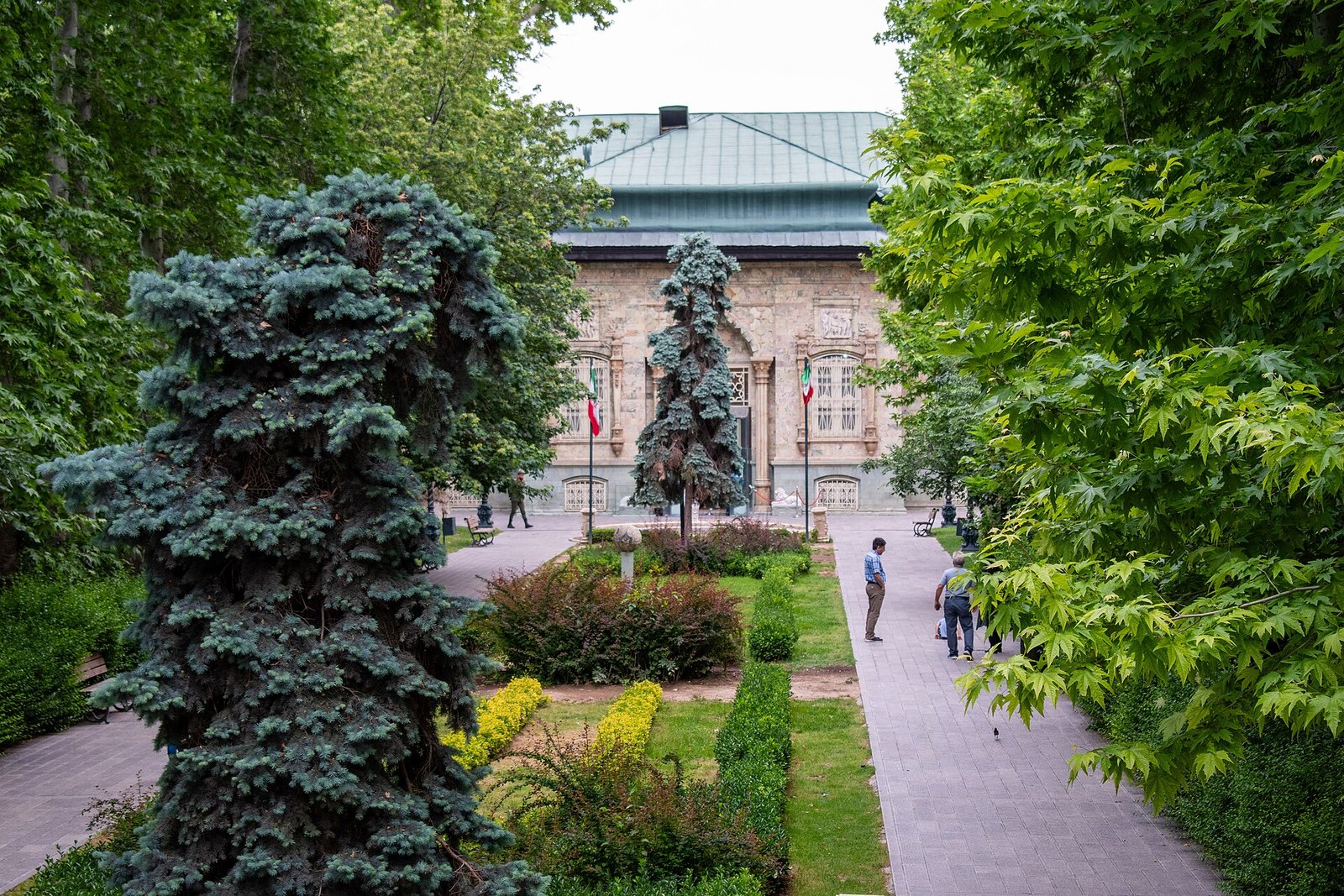
The Qajar royal complex, a UNESCO World Heritage site, with tiled courtyards, the dazzling Hall of Mirrors and the Marble Throne terrace. Its blend of Persian craft and nineteenth-century European influence is unique.
A wooded estate of palaces and pavilions at the foot of the mountains, now home to a group of museums covering fine arts, royal life and calligraphy.
A garden estate with a Qajar pavilion and a twentieth-century palace, preserving furnishings, art and libraries.
A soaring white marble gateway completed in 1971, blending Sasanian and Islamic architectural forms. It has become the city's most recognizable landmark.
A modern telecommunications tower among the tallest in the world, with panoramic views over the city and the mountains.
Museums
Two buildings tell the story of the land from prehistory to the Islamic era, including reliefs from Persepolis and finely painted early ceramics.
Held in a bank vault, the crown jewels include the Darya-ye Noor diamond, the Naderi Throne and a jeweled globe set with thousands of gems.
A building shaped like a carpet loom, displaying masterpieces of Persian weaving from many regions and centuries.
A Qajar mansion with exquisite interiors housing glass and pottery spanning thousands of years.
A striking building inspired by desert wind towers, holding one of the most significant collections of modern Western and Iranian art outside Europe and North America.
Named for the great Safavid painter, with miniature paintings, calligraphy, metalwork and textiles.
The Persian garden, with its geometric water channels and shaded walks, is one of Iran's great gifts to world design; nine historic examples are listed together by UNESCO. In Tehran the palace gardens of Golestan, Sa'dabad and Niavaran carry the tradition, alongside large public parks on the mountain slopes.
The Grand Bazaar, a labyrinth of covered lanes near Golestan Palace, has been the commercial heart of the city since the Qajar era, organized by trade into sections for carpets, copper, spices, gold and fabrics. Read more about the region's history of exchange in trade routes and the Silk Road.
Tehran is a center for Persian carpet trading and for miniature painting, calligraphy, enamel work and inlaid khatam marquetry. The city's music and literary life draw on a classical tradition stretching from the poets Ferdowsi and Hafez to the masters of Persian classical music; see our pages on Islamic art and architecture and music traditions. The spring festival of Nowruz, the Persian New Year, is celebrated with special warmth and is recognized by UNESCO as living heritage.
Ultra-Luxury Real Estate · Own Here
Across the Middle East, the finest resorts and the finest homes now sit side by side, and many international buyers own before they ever visit.
Ultra-Luxury Tourism & Ultra-Luxury Real Estate
Checked October 2026. Prices and dates are approximate and can change. See our standard.