Sheikh Abdullah Al Salem Cultural Centre
One of the world's largest museum complexes, with galleries on natural history, science, space and Islamic civilization.

Home›Culture›Timeline›Kuwait: History and Culture
Kuwait
Kuwait history is a story of the sea: pearl divers, dhow builders and merchants who traded from India to East Africa long before the city's towers rose. Kuwaiti culture, centered on the diwaniya and family, remains warm, social and proud of its maritime roots.
At a glance
Eras of Kuwait history
Failaka Island, just off the coast, was settled in the Bronze Age as part of the Dilmun trading civilization, and later Hellenistic settlers built a temple and fort there after the era of Alexander the Great. Its ruins remain a fascinating day trip.
In the early 18th century, families of the Bani Utub settled on Kuwait Bay, and in 1752 they chose Sabah I as their leader, beginning the reign of the Al Sabah family. Kuwait grew into a busy port whose sailors carried dates, horses and spices, and whose divers harvested pearls on the Gulf banks. The city was protected by a mud-brick wall, and its old gates still stand.
Kuwait became independent in 1961 and adopted a constitution and an elected National Assembly soon after. Oil, discovered in 1938, funded schools, hospitals and some of the region's earliest cultural institutions. Today Kuwait Vision 2035 aims to diversify the economy. Read about the royal family of Kuwait, pearling in the Gulf and Kuwait Vision 2035.
Languages and five useful
Kuwaiti Arabic belongs to the Gulf dialect family, and English is widely spoken in business and hotels.
| English | Local phrase | Say it like |
|---|---|---|
| Hello | As-salamu alaykum | ah-sah-LAH-moo ah-LAY-koom |
| Thank you | Shukran | SHOOK-ran |
| How are you? | Shlonik? | SHLOH-nik |
| Good / fine | Zain | zayn |
| Goodbye (go in safety) | Ma'a as-salama | MA-ah sa-LAH-ma |
Sadu, the geometric weaving of Bedouin women in red, black and white, is recognized by UNESCO, and Al Sadu House in Kuwait City keeps the craft alive with workshops. Dhow building was once the nation's great craft, and wooden boums and jalbouts can still be admired at the Maritime Museum and the shipyards.
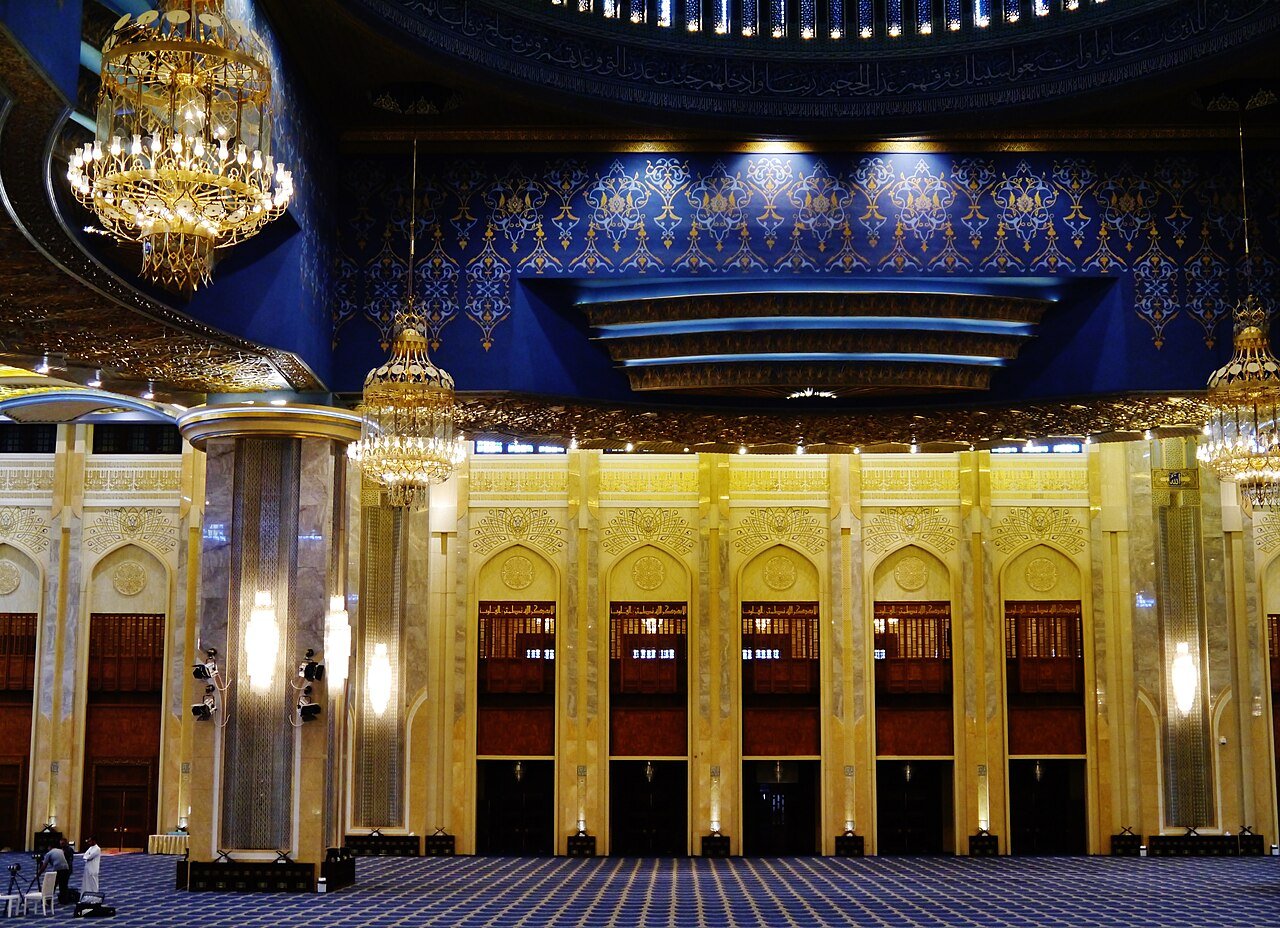
Kuwait's architecture is a story of daring modern design: the Kuwait Towers, opened in 1979, became a national symbol, and the National Assembly building is the work of Jørn Utzon, the architect of the Sydney Opera House. The Sheikh Jaber Al-Ahmad Cultural Centre, one of the largest in the region, stages opera, theater and concerts. Learn more on our page about Bedouin heritage.
Machboos, spiced rice with chicken, lamb or fish, is the national dish, often served with a tangy tomato sauce called daqoos. Mutabbaq zubaidi, pomfret fish over rice, celebrates the sea, and harees, wheat and meat slow-cooked to a creamy porridge, is a Ramadan essential.
Gers ogaily, a saffron and cardamom cake, is served with tea, and lugaimat, golden dumplings drizzled with date syrup, are loved across the Gulf. Coffee scented with cardamom and saffron is offered to every guest, and during Ramadan families share the evening iftar with neighbors, sending plates of food from house to house in a gesture of goodwill. See our guide to Arabic coffee and dates.
One of the world's largest museum complexes, with galleries on natural history, science, space and Islamic civilization.
A private collection of Islamic art, calligraphy, jewelry and costume from across the Islamic world.
A traditional courtyard house dedicated to Sadu weaving, with exhibitions and demonstrations.
One of the oldest markets in the Gulf, for spices, dates, perfumes and traditional dress.
Bronze Age Dilmun sites and a Hellenistic temple, reached by ferry.
The diwaniya, an evening gathering of men in a reception room open to friends and visitors, is the heart of Kuwaiti social life, and women host their own gatherings too. Girgian, a children's festival in mid-Ramadan, fills the streets with songs and sweets. In winter, families head to desert camps for weekends of barbecues, stargazing and falconry, a reminder of the Bedouin roots that sit alongside the seafaring heritage. The national holidays in late February bring fireworks, music and flags all along the Gulf Road. Read about Arab hospitality and the majlis.
Kuwait's dinar is the world's highest-valued currency unit. The Kuwait Towers store water as well as offering panoramic views. Kuwait's Arabi magazine, launched in 1958, was read across the Arab world. Plan a visit with our Kuwait travel guide and our page on Kuwait City's hotels.
Ultra-Luxury Real Estate · Own Here
The places you discover as a guest are the places to own. Mainly reserved for Kuwaiti and GCC citizens; foreign investors take part through listed companies and funds.
Ultra-Luxury Tourism & Ultra-Luxury Real Estate
Checked October 2026. Prices and dates are approximate and can change. See our standard.