Kufic
Angular and geometric, Kufic was used for the earliest Quran manuscripts and for architectural inscriptions. Its square variant still appears in modern logos and tile patterns.

Home›Culture›Timeline›Arabic and Calligraphy
Culture
Arabic calligraphy is the signature art of the Middle East, turning the Arabic language into flowing lines that decorate mosques, palaces, coins and contemporary canvases. For curious travelers, learning to read its styles opens a new way of seeing the region's great buildings and museums.
At a glance
Arabic is the language of the Quran, and the wish to write the sacred text beautifully gave calligraphy a place of honor that painting held in the West. Over centuries, scribes turned the 28 letters of the alphabet into an art with strict rules of proportion, measured in the rhombic dots made by the tip of a reed pen, the qalam.
Today Arabic calligraphy lives on far beyond manuscripts. You will find it carved in stone on the Dome of the Rock, glazed onto tiles in Isfahan, woven into the Kiswa that covers the Kaaba, lit up on Dubai's Museum of the Future, and painted on canvas by contemporary artists across the Gulf. In 2021 UNESCO recognized the knowledge and skills of Arabic calligraphy as Intangible Cultural Heritage, a nomination shared by 16 Arab countries; see our page on living heritage.
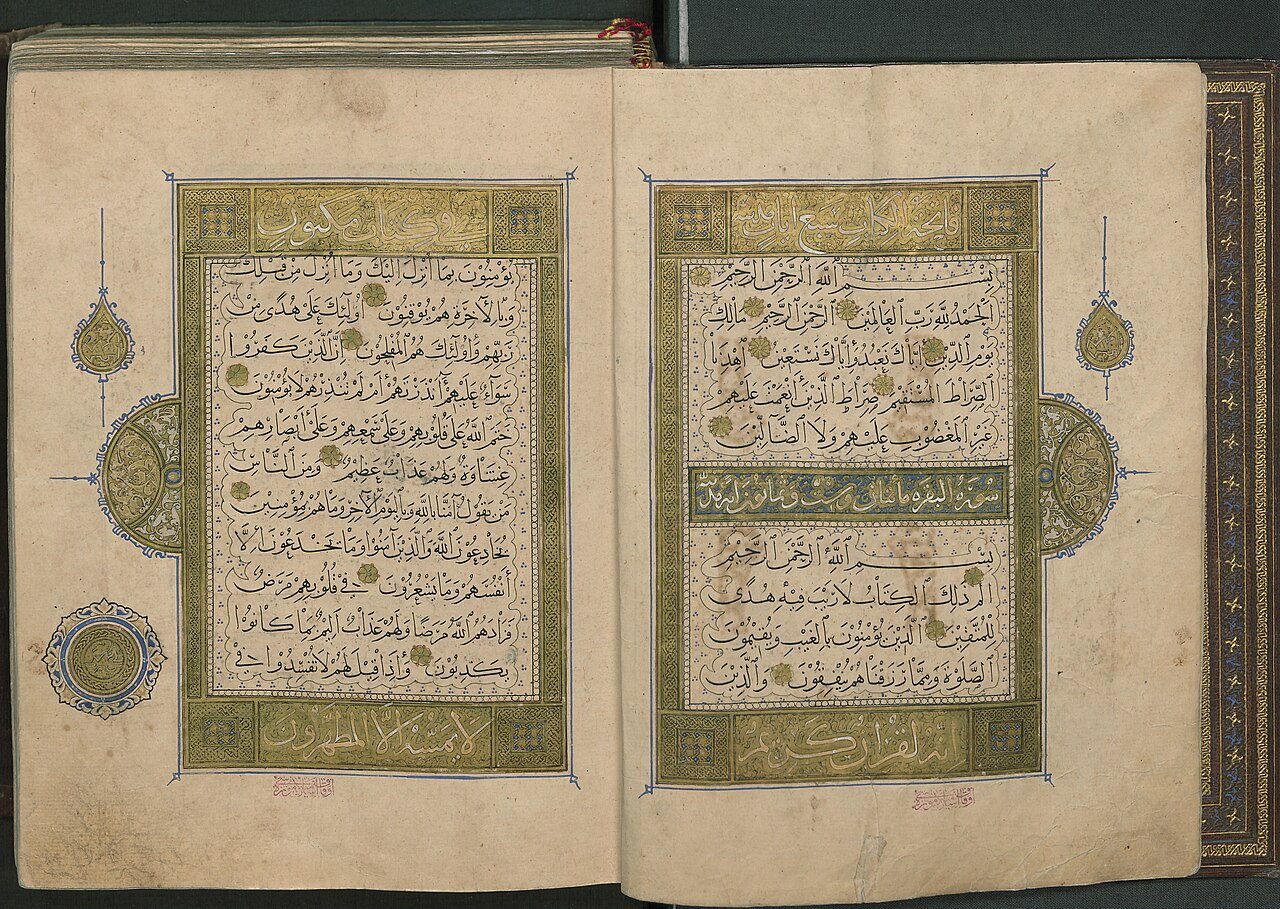
Great scripts
Angular and geometric, Kufic was used for the earliest Quran manuscripts and for architectural inscriptions. Its square variant still appears in modern logos and tile patterns.
Clear and rounded, Naskh became the everyday script for copying books and is the ancestor of most printed Arabic fonts today.
Grand and sweeping, Thuluth is the script of mosque domes, gateways and the Kiswa. It is regarded as the most demanding to master.
Developed at the Ottoman court, Diwani is ornate and tightly woven, used for royal decrees and seals.
The elegant hanging script of Persia, beloved for poetry and miniature painting, best seen in Isfahan and Tehran.
North Africa's distinctive script, with generous curves, still used in Moroccan manuscripts and decoration in Fes and Marrakech.
The most rewarding places are great mosques and museums. The Sheikh Zayed Grand Mosque in Abu Dhabi uses Kufic, Naskh and Thuluth across its courtyards. The Museum of Islamic Art in Doha and the Louvre Abu Dhabi hold superb manuscripts and inscribed objects; see our museums guide. In Makkah, the King Abdulaziz Complex for the Holy Kaaba Kiswa shows calligraphers at work in gold and silver thread, and in Istanbul, the Turkish and Islamic Arts Museum is a highlight of any Istanbul stay.
Sharjah, the UAE's cultural capital, has a dedicated Calligraphy Museum in its Heart of Sharjah heritage district, and hosts a well-known calligraphy biennial; see Sharjah travel. For the wider artistic context, read our page on Islamic art and architecture.
Many luxury hotels and cultural centers can arrange a private session with a master calligrapher, who will show you how to cut a reed pen, mix ink and write your name. It makes a meaningful souvenir, and a framed piece by a known artist is a fine purchase for a home or office; our galleries and auction houses page lists respected dealers. To go further with the spoken language, our guide to Arabic phrases for travelers is a friendly start.
The art is thriving. A movement sometimes called calligraffiti blends Arabic letters with street art, and you will find it on walls in Dubai's Alserkal Avenue, Riyadh's JAX District and Doha's Msheireb. Fashion houses, jewelers and perfumers across the Gulf use calligraphic motifs on everything from abayas to bottles, and many of the region's newest buildings, including the Museum of the Future, wrap their facades in poetry. It is one of the most distinctive things a visitor can bring home.
Not at all. Most visitors appreciate it first as abstract art; museum labels and guides explain what the inscriptions say.
Respected galleries in Dubai, Sharjah, Doha and Riyadh represent contemporary calligraphers; ask your hotel concierge for a private studio visit.
Yes. Lessons are offered to everyone through cultural centers, museums and hotels.
Ultra-Luxury Real Estate · Own Here
Across the Middle East, the finest resorts and the finest homes now sit side by side, and many international buyers own before they ever visit.
Ultra-Luxury Tourism & Ultra-Luxury Real Estate
Checked October 2026. Prices and dates are approximate and can change. See our standard.