The dome
A symbol of the heavens, domes range from the gilded Dome of the Rock to the vast Ottoman domes of Istanbul.

Home›Culture›Timeline›Islamic Art and Architecture
Culture
Islamic architecture has given the Middle East some of the world's most beautiful buildings, from the Dome of the Rock to the blue domes of Isfahan and the white marble of Abu Dhabi. This guide to Islamic art explains the key features and styles, and where travelers can see the finest examples.
At a glance
From Morocco to Iran, Islamic art and architecture share a set of ideas: geometry that suggests the infinite, calligraphy as decoration, the arabesque of interlacing vines, and light and water used to create calm. Buildings face inward around courtyards and gardens, offering shade and quiet from the street.
Each dynasty added its own accent. The Umayyads blended Byzantine and Persian traditions; the Abbasids built on a vast scale; the Fatimids and Mamluks filled Cairo with domes and minarets; the Ottomans perfected the central dome; the Safavids clad Isfahan in blue tile; and Morocco developed its own world of carved cedar, stucco and zellige mosaic.
A symbol of the heavens, domes range from the gilded Dome of the Rock to the vast Ottoman domes of Istanbul.
The tower from which the call to prayer is made, square in North Africa, slender and pencil-like in Ottoman lands, spiraling in Samarra.
The mihrab niche shows the direction of Makkah; the courtyard, often with a fountain for ablutions, is the heart of the mosque.
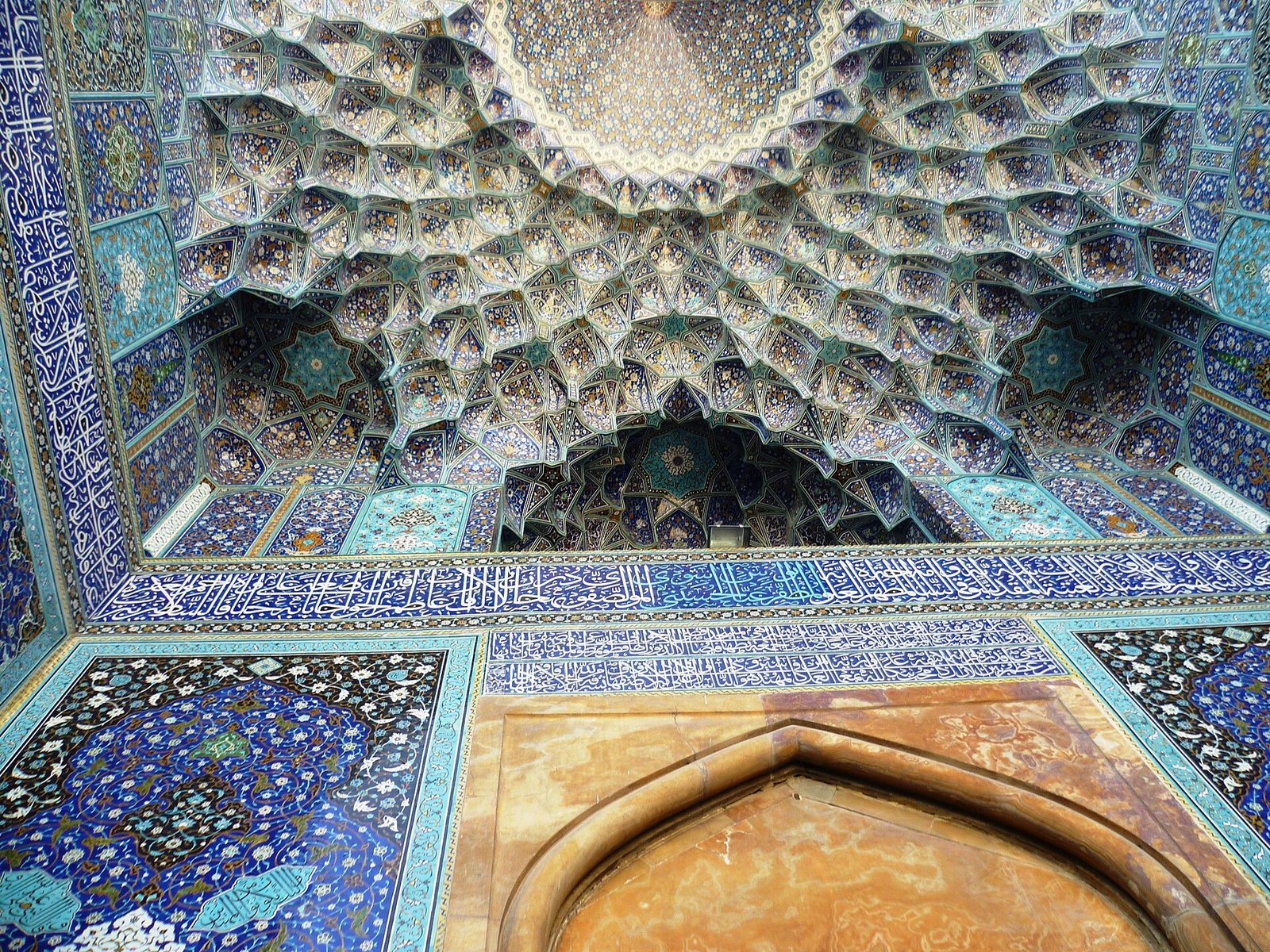
Honeycomb vaulting that seems to dissolve ceilings into light, seen at its finest in Isfahan and in Moroccan palaces.
Star patterns in zellige, Iznik and Persian tiles that repeat endlessly, a meditation in color.
Carved wooden lattice screens that cool and shade, reinterpreted in modern towers and in the Louvre Abu Dhabi's dome.
White marble, 82 domes and one of the world's largest hand-knotted carpets; open to visitors outside prayer times. Combine with a stay among Abu Dhabi's luxury hotels.
Set over the Atlantic, with one of the tallest minarets in the world; guided tours are open to non-Muslims. See Casablanca.
The Ottoman architect Sinan's masterpiece and the six-minaret Sultan Ahmed Mosque face each other across the old city.
A UNESCO-listed square framed by the Shah and Sheikh Lotfollah mosques, among the summits of Persian design. See our Isfahan heritage page.
A thousand years of domes and minarets in a UNESCO-listed historic city.
Carved cedar, stucco and tile in the world's oldest continuously operating university. See Fes.
For portable treasures, from carpets and ceramics to manuscripts and metalwork, start with I. M. Pei's Museum of Islamic Art in Doha, then the Louvre Abu Dhabi and Kuwait's Dar al-Athar al-Islamiyyah. Our museums guide and great mosques and Islamic sites page help plan a route, and our Arabic calligraphy page explains the inscriptions you will see. Visiting a mosque? Read our etiquette guide first.
Modern architecture inspired
Many of the region's newest landmarks borrow from these ideas. Jean Nouvel's dome at the Louvre Abu Dhabi filters light like a palm canopy; Doha's Museum of Islamic Art draws on the ablution fountain of Cairo's Ibn Tulun Mosque; and the towers of Riyadh and Dubai often use mashrabiya-style screens to shade glass from the sun. Seeing old and new side by side is one of the pleasures of a trip; our amazing things being built page shows what comes next.
Many famous mosques welcome visitors outside prayer times, including the Sheikh Zayed Grand Mosque, the Hassan II Mosque and the Blue Mosque. Dress modestly and women cover their hair.
Islamic architecture spans many cultures, including Persian, Turkish, Moroccan and Indian, while Arab architecture refers to the Arab lands in particular.
Late afternoon and sunset, when marble and tile glow; the Sheikh Zayed Grand Mosque is lit beautifully after dark.
Ultra-Luxury Real Estate · Own Here
Across the Middle East, the finest resorts and the finest homes now sit side by side, and many international buyers own before they ever visit.
Ultra-Luxury Tourism & Ultra-Luxury Real Estate
Checked October 2026. Prices and dates are approximate and can change. See our standard.