Al-Khwarizmi (about 780–850)
Baghdad mathematician whose book gave us the word algebra and whose name gave us algorithm. He popularized the Hindu-Arabic numerals we use today.

Home›Culture›Timeline›The Golden Age of Science
Culture
The Islamic Golden Age, roughly the 8th to the 13th centuries, made the Middle East the world's center of science and learning. Scholars in Baghdad, Cairo, Córdoba and Fes advanced algebra, astronomy, medicine and optics, and travelers can still trace that legacy in museums, libraries and observatories across the region.
At a glance
After the Abbasid caliphs founded Baghdad in 762, the city drew scholars of many faiths and languages. In the House of Wisdom, translators rendered Greek, Persian and Indian works into Arabic, preserving texts that might otherwise have been lost, and then went far beyond them. Paper, learned from China, made books cheaper, and libraries flourished from Cairo to Córdoba.
Learning was considered a virtue, and patrons funded hospitals, observatories and schools. Fatima al-Fihri founded Al-Qarawiyyin in Fes in 859, recognized today as the world's oldest continuously operating university, and Cairo's Al-Azhar followed in 970.
Baghdad mathematician whose book gave us the word algebra and whose name gave us algorithm. He popularized the Hindu-Arabic numerals we use today.
Working in Cairo, he explained how vision works, studied light with experiments, and is often called a father of the scientific method.
Persian physician and philosopher whose Canon of Medicine was taught in European universities for centuries.
Polymath who calculated the Earth's radius with remarkable accuracy and wrote on astronomy, geography and India.
Physician in Baghdad and Rayy who distinguished smallpox from measles and championed clinical observation.
Engineer of ingenious water clocks and automata, whose drawings fascinate inventors to this day.
The Moroccan from Tangier who traveled some 75,000 miles and left one of history's great travel books. See Tangier.
Legacy you can see today
Astrolabes, star charts and medical manuscripts fill the galleries of Doha's Museum of Islamic Art, the Louvre Abu Dhabi and Istanbul's Museum for the History of Science and Technology in Islam, a highlight for families; see our museums guide. In Fes, the restored library of Al-Qarawiyyin is a moving sight from its doorway. The spirit lives on in the region's new science cities, space programs and AI investments, explored in our AI and technology and space and clean energy pages.
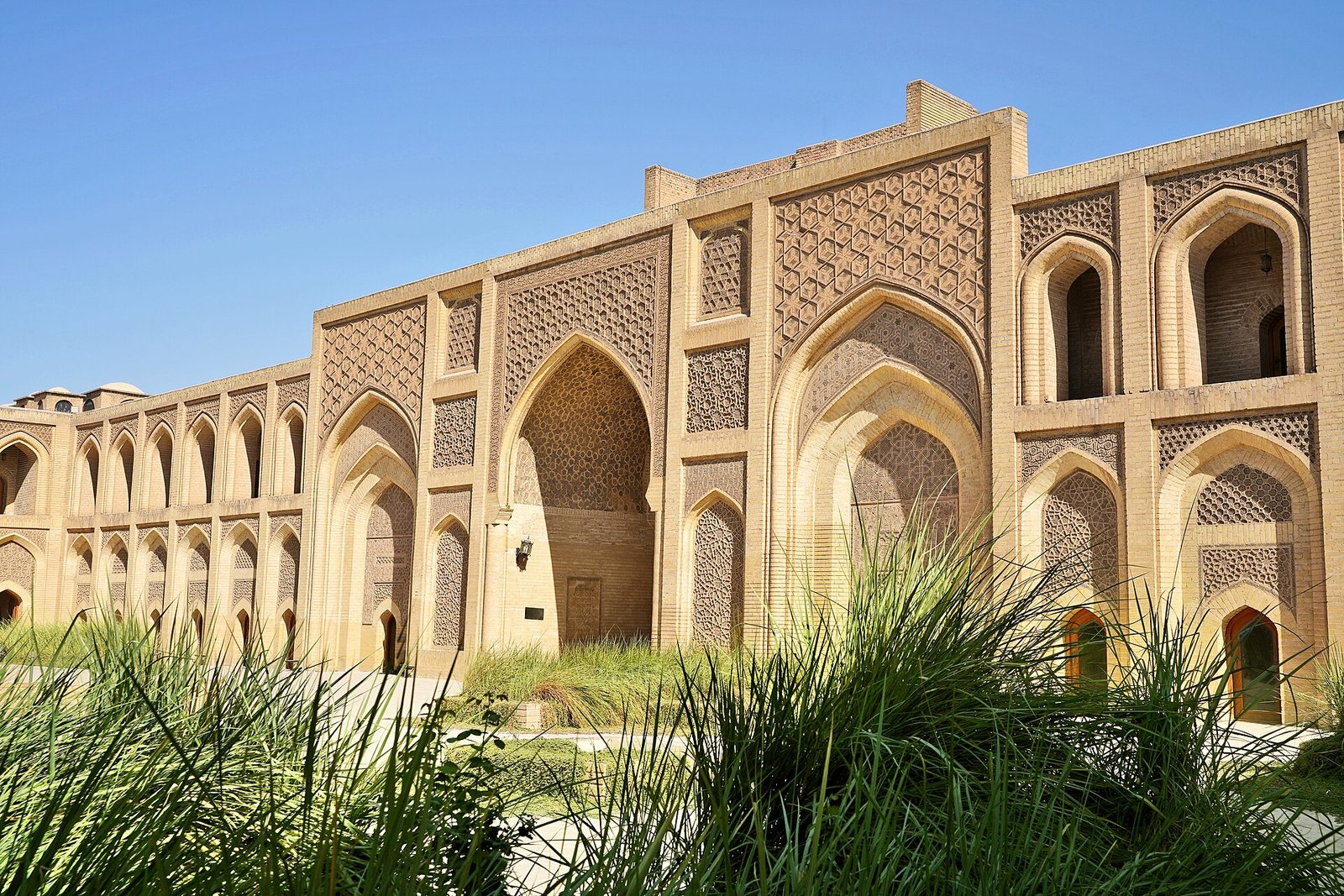
Much of what became the European Renaissance rested on Arabic translations and discoveries carried through Spain, Sicily and the eastern Mediterranean. Stars still bear Arabic names, among them Aldebaran, Altair and Betelgeuse, and words like zero, cipher, alchemy and zenith came into English via Arabic. Our timeline places this age in the wider story, and Islamic art and architecture shows the geometry that science inspired.
No. Christian, Jewish and other scholars worked alongside Muslims, and the shared language of science was Arabic.
It stood in Baghdad; no building survives, but its legacy lives in the texts it produced.
Istanbul's Museum for the History of Science and Technology in Islam has working replicas that children love.
Hospitals, gardens and everyday
The age left practical gifts as well as theories. Baghdad, Damascus and Cairo had large public hospitals, bimaristans, with wards, pharmacies and music for patients; Damascus's Nur al-Din bimaristan and Cairo's Qalawun complex still stand. Engineers refined the windmill, the water wheel and the qanat irrigation tunnel, and gardeners spread oranges, lemons, sugar cane and rice westward. Even the coffeehouse, the ancestor of every cafe, has roots in this world; see coffee and dates.
Ultra-Luxury Real Estate · Own Here
Across the Middle East, the finest resorts and the finest homes now sit side by side, and many international buyers own before they ever visit.
Ultra-Luxury Tourism & Ultra-Luxury Real Estate
Checked October 2026. Prices and dates are approximate and can change. See our standard.