At-Turaif District, Diriyah
The UNESCO-listed birthplace of the first Saudi state, with restored palaces and a museum quarter beside the Bujairi dining terrace.

Home›Culture›Royal Families›House of Saud
Royal Families · Saudi Arabia
The House of Saud has shaped the Arabian Peninsula since 1727, and Saudi Arabia's royal family now leads one of the fastest-changing countries on earth, a story you can trace on a Saudi Arabia luxury travel journey from Diriyah to Riyadh.
At a glance
Diriyah and the first
The family's story begins in Diriyah, an oasis town on the edge of today's Riyadh. In 1727 Imam Muhammad bin Saud became its ruler, founding what historians call the first Saudi state. The date is honored every 22 February as Founding Day, a national holiday of heritage dress, poetry and traditional dance.
The mud-brick district of At-Turaif in Diriyah, the family's original seat, is a UNESCO World Heritage Site and the centerpiece of one of the kingdom's most ambitious cultural projects. Visit it through our guide to Diriyah and read about the wider Diriyah Gate project.
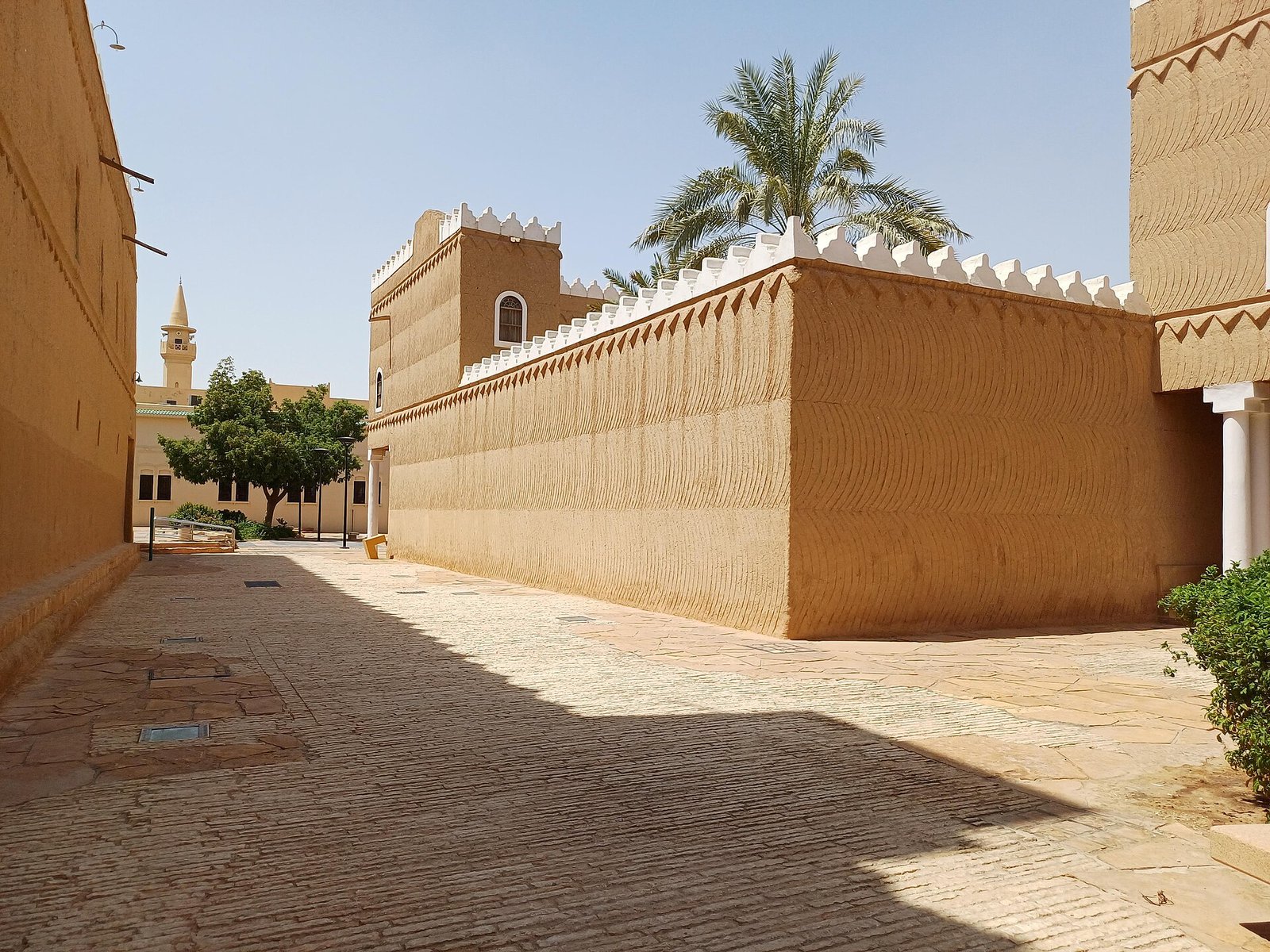
Saudi history is told in three chapters. The first Saudi state lasted from 1727 to 1818. The second was established in 1824 and lasted until 1891. The third began in 1902, when Abdulaziz bin Abdulrahman Al Saud, known to the world as Ibn Saud, returned to Riyadh and began the work of unifying the peninsula.
On 23 September 1932 King Abdulaziz proclaimed the Kingdom of Saudi Arabia, a date now celebrated as National Day. The Masmak Fortress in central Riyadh, where the story of the third state begins, is today a museum. Every king since has been a son of King Abdulaziz. For the broader picture, see Saudi Arabia's history and culture.
Kings who built
King Faisal, who reigned from 1964 to 1975, is remembered for modernizing the state and for opening the first public schools for girls, a milestone in Saudi education.
King Fahd reigned from 1982 to 2005. In 1986 he adopted the title Custodian of the Two Holy Mosques, a reference to the Grand Mosque in Makkah and the Prophet's Mosque in Madinah, and he oversaw their great expansions to welcome millions of pilgrims.
King Abdullah, who reigned from 2005 to 2015, founded the Allegiance Council, the body of senior family members that takes part in confirming the line of succession, and launched a large scholarship program that sent tens of thousands of young Saudis to study abroad, many of them in the United States.
King Salman and Crown
The Custodian of the Two Holy Mosques King Salman bin Abdulaziz Al Saud has reigned since 23 January 2015. Before taking the throne he served for almost five decades as Governor of Riyadh, overseeing the city's growth into a modern capital, and he is known as a devoted student of Arabian history.
His Royal Highness Prince Mohammed bin Salman has been Crown Prince since 21 June 2017 and Prime Minister since 2022. He leads Saudi Vision 2030, the national program behind new industries, tourism, culture, sport and entertainment, and behind projects such as NEOM, the Red Sea and Qiddiya. Explore it in Saudi Vision 2030 and the giga-projects.
Members of the royal
Many members of the House of Saud hold public office. Among those in roles visitors may hear about: Prince Faisal bin Farhan, Minister of Foreign Affairs; Prince Abdulaziz bin Salman, Minister of Energy and, since July 2026, also Minister of Industry and Mineral Resources; Prince Badr bin Abdullah bin Farhan, Minister of Culture; Prince Abdulaziz bin Turki Al Faisal, Minister of Sport; and Princess Reema bint Bandar, Ambassador to the United States and the first woman to hold the post.
The King's formal style is The Custodian of the Two Holy Mosques King Salman bin Abdulaziz Al Saud; the title Custodian is used in place of His Majesty in official usage. The Crown Prince is His Royal Highness Prince Mohammed bin Salman, Crown Prince and Prime Minister. Princes and princesses are styled His or Her Royal Highness.
Makkah is a holy city that only Muslims may enter; visitors of other faiths will find Diriyah, AlUla and Riyadh the best places to experience Saudi royal heritage.
Royal heritage to see
Places that tell the story of the House of Saud on a Saudi Arabia luxury travel itinerary.
The UNESCO-listed birthplace of the first Saudi state, with restored palaces and a museum quarter beside the Bujairi dining terrace.
The clay fort at the heart of the story of the third Saudi state, now a museum in the old city; see Riyadh.
King Abdulaziz's palace complex, set beside the National Museum and gardens.
Not royal in origin, but protected under the Royal Commission for AlUla, a flagship of the kingdom's heritage program; see AlUla.
Few royal families have shaped a nation's story as completely as the House of Saud. Start planning with our Saudi Arabia luxury travel guide, and compare the region's royal houses on royal families of the Middle East.
Ultra-Luxury Real Estate · Own Here
Across the Middle East, the finest resorts and the finest homes now sit side by side, and many international buyers own before they ever visit.
Ultra-Luxury Tourism & Ultra-Luxury Real Estate
Checked October 2026. Prices and dates are approximate and can change. See our standard.