Cyprus Museum
The island's main archaeological museum, with Bronze Age figurines, hundreds of terracotta figures from Agia Irini and classical sculpture.

Home›Culture›Timeline›Cyprus: History and Culture
Cyprus
Cyprus history begins with Neolithic villages and the myth of Aphrodite rising from the sea, and runs through Greek kingdoms, Roman mosaics and painted Byzantine churches. Cypriot culture, warm and unhurried, is best enjoyed over a long meze on a Cyprus vacation.
At a glance
Eras of Cyprus history
Choirokoitia, a Neolithic village of round stone houses, is one of the best-preserved prehistoric settlements in the eastern Mediterranean. In the Bronze Age the island grew wealthy exporting copper, and the metal's very name may derive from Cyprus.
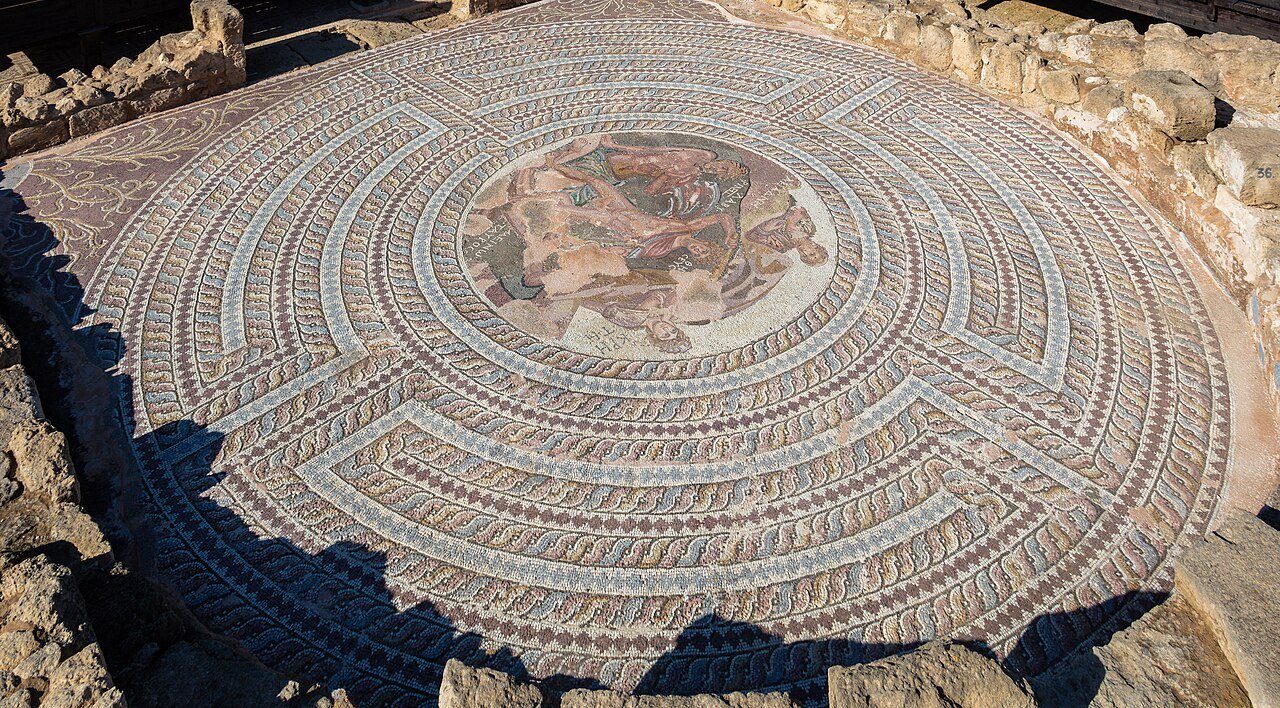
Greek city-kingdoms such as Salamis, Kourion and Paphos flourished, and Aphrodite, said to have been born from the foam at Petra tou Romiou, became the island's goddess. Under Rome, the villas of Nea Paphos were floored with mosaics that rank among the finest anywhere. In the Byzantine era, small mountain churches in the Troodos were covered with frescoes, now a World Heritage Site.
Later the Lusignan dynasty built Gothic cathedrals in Nicosia and Famagusta (Ammochostos / Gazimağusa), the Venetians raised Nicosia's star-shaped walls, and Ottoman rule added mosques, caravanserais and hammams. The Republic of Cyprus became independent in 1960 and joined the European Union in 2004. See the regional history timeline.
Languages and five useful
Greek and Turkish are both official languages, Cypriot Greek has its own lilting dialect, and English is spoken almost everywhere.
| English | Local phrase | Say it like |
|---|---|---|
| Hello | Yia sou (Greek) / Merhaba (Turkish) | YAH-soo / MER-ha-ba |
| Thank you | Efcharistó / Teşekkürler | ef-ha-ree-STOH / teh-shek-kur-LER |
| Good morning | Kaliméra / Günaydın | kah-lee-MEH-rah / goon-eye-DUN |
| Cheers! | Yiamas / Şerefe | yah-MAS / sheh-reh-FEH |
| Please | Parakaló / Lütfen | pah-rah-kah-LOH / LUT-fen |
Lefkara lace, hand-stitched in the village of the same name, is recognized by UNESCO and was admired, legend says, by Leonardo da Vinci. Silversmiths, potters and basket weavers keep village crafts alive, and the island's Byzantine icons are treasures of devotional art.
Architecture tells the whole story: Roman theaters at Kourion and Salamis, painted Troodos chapels, Gothic abbeys such as Bellapais (Beylerbeyi), Venetian bastions and Ottoman mosques. Contemporary art thrives in Nicosia's galleries and in Limassol's seafront spaces.
Cypriot food is a feast of small plates. A full meze can run to twenty dishes: halloumi grilled until golden, taramosalata, smoky sheftalia sausages, kleftiko lamb slow-baked in a clay oven, and souvla turned over charcoal. Halloumi now carries protected designation of origin status in the European Union.
Commandaria, a sweet dessert wine from the Troodos foothills, is often called the world's oldest named wine still in production. Village tavernas, Limassol's wine festival and loukoumades drizzled with honey complete the picture. In the Troodos villages of Omodos and Lofou, family wineries open their cellars to visitors, and the old stone streets are perfect for a slow afternoon. Find more on our best restaurants page.
The island's main archaeological museum, with Bronze Age figurines, hundreds of terracotta figures from Agia Irini and classical sculpture.
Roman villas with mythological mosaics, the Tombs of the Kings and a medieval harbor castle. A World Heritage Site.
A clifftop Greco-Roman city with a theater overlooking the sea, used for summer performances.
Ten small churches and monasteries with exceptional frescoes, set among pine forests and vineyards.
A Neolithic settlement with reconstructed round houses.
Village festivals called panigyria honor patron saints with food and music, Kataklysmos celebrates the sea at Pentecost, and coffee in the village square remains a daily ritual. The tradition of improvised poetry, tsiattista, is recognized by UNESCO. Easter is the high point of the Greek Cypriot year, with candlelit midnight services, flaounes cheese pastries and red-dyed eggs, while Turkish Cypriot communities mark Ramadan and Eid with family feasts and sweets. Across the island, grandmothers still make halloumi and preserves at home, and the evening volta, a stroll along the seafront, brings whole towns outdoors. Explore more on our page about intangible heritage.
Cyprus has some of the sunniest weather in Europe, with roughly 300 days of sun a year. Saint Lazarus is said to have lived in Larnaca, where his church still stands. Mouflon, a wild sheep, roams the Troodos and appears on Cypriot coins. Plan your trip with our Cyprus luxury travel guide and our page on Limassol hotels.
Ultra-Luxury Real Estate · Own Here
The places you discover as a guest are the places to own. Non-EU buyers apply for a permit, generally for up to two homes.
Ultra-Luxury Tourism & Ultra-Luxury Real Estate
Checked October 2026. Prices and dates are approximate and can change. See our standard.