Inscribed1985
Petra, Jordan
The rose-red city of the Nabataeans; arrive at dawn and stay at one of our Petra hotels.


Home›Culture›Faith and Heritage›UNESCO World Heritage
Faith and Heritage
The UNESCO World Heritage sites of the Middle East span ten thousand years, from the carved pillars of Göbekli Tepe to the Pearling Path of Bahrain. Here is every inscribed site in our 17 countries, grouped by country, to help plan a heritage-rich luxury Middle East vacation.
At a glance
Region's World Heritage
Across our 17 countries, UNESCO has inscribed 138 World Heritage properties as of the 2026 session of the World Heritage Committee, held in Busan, Korea. Iran and Türkiye hold the most; Kuwait has none yet. Below they are grouped by country, each with its year of inscription; the leading sites are marked as highlights and the newest are marked as new. UNESCO also lists the Old City of Jerusalem and its Walls as a separate entry, and six properties under the State of Palestine, shown here under the Palestinian Territories.
Recent additions include the Faya Palaeolandscape in Sharjah, the Khorramabad Valley in Iran and Sardis in Türkiye (2025), and in 2026 the village of Sidi Bou Saïd in Tunisia, the Aqaba Marine Reserve in Jordan, Wadi Wurayah in Fujairah, Alamūt Castle and its related fortifications in Iran, the Mount Amel Castles in Lebanon and Sebastia in the Palestinian Territories.
Essential UNESCO World Heritage
The rose-red city of the Nabataeans; arrive at dawn and stay at one of our Petra hotels.
Nabataean tombs at AlUla and the restored mud-brick heart of Diriyah.
Carved stone pillars more than eleven thousand years old.
The Achaemenid ceremonial capital, presented here as heritage.
The legendary Mesopotamian capital on the Euphrates.
Colossal Roman temples and one of the oldest cities on earth.
The Punic and Roman city on the Gulf of Tunis, near Sidi Bou Saïd.
Two of the world's great living medieval cities.
Testaments to the Gulf's pearling age; read our pearling history.
Mud-brick grandeur and the frankincense trade of Dhofar.
Oasis heritage, deep prehistory and, since 2026, the mountain wadis of Fujairah; see our Al Ain guide.
Dress, hours and etiquette
Most archaeological sites open from early morning until late afternoon, with longer hours in summer; arrive at opening to avoid heat and crowds. Many sites in Muslim-majority countries keep shorter hours on Fridays and during Ramadan, and religious monuments within World Heritage cities close to visitors at prayer times. In Israel, some sites close early on Fridays and on the eve of holidays.
Wear comfortable shoes, a hat and modest clothing that covers shoulders and knees, which is also correct for the mosques, churches and synagogues inside many historic cities. Never climb on monuments, touch paintings or remove stones, and use drones only with a permit. A licensed guide, often an archaeologist, brings each site to life; for wider context, read our history timeline and the region's living heritage.
More in our Morocco history and culture guide.
The world's largest car-free medieval city, with the Al-Qarawiyyin mosque and university and the famous tanneries.
Red-walled medina around Jemaa el-Fna square, the Koutoubia minaret and the Saadian Tombs.
A fortified earthen village on the old caravan route over the High Atlas, beloved by filmmakers.
The imperial city of Sultan Moulay Ismail, with monumental gates and vast granaries.
A Roman provincial town with mosaics still in place, set among olive groves near Meknes.
A whitewashed medina shaped by Andalusian refugees, beneath the Rif mountains.
An 18th-century fortified port on the Atlantic, planned by a European architect for the sultan.
A Renaissance fortress town with a celebrated vaulted cistern.
The royal capital, where the Kasbah of the Udayas and Hassan Tower meet a garden city of the early 20th century.
More in our Algeria history and culture guide.
Ruins of the first capital of the Hammadid emirs, with a tall early minaret.
A beautifully preserved Roman mountain town with forum, temples and basilicas.
Five fortified ksour of the 10th century whose clean, functional forms inspired modern architects.
A mixed natural and cultural site: sandstone forests in the Sahara holding thousands of prehistoric rock paintings.
A Roman military colony laid out on a perfect grid by Emperor Trajan.
Phoenician, Roman and early Christian ruins on the Mediterranean shore.
The hillside old city of Algiers, with Ottoman palaces and mosques overlooking the bay.
More in our Tunisia history and culture guide.
One of the largest Roman amphitheaters ever built, remarkably intact.
The great Phoenician and later Roman city beside modern Tunis.
Souks, mosques and palaces around the Zitouna Mosque.
A lake and wetland that hosts hundreds of thousands of migrating birds each winter.
The only Phoenician-Punic town preserved without later Roman building.
A holy city of Islam with the Great Mosque, among the oldest in North Africa.
A walled medina with a ribat and kasbah from the early Islamic period.
A complete Roman-era town on a hilltop, with a superb capitol and theater.
The island's scattered farmsteads, mosques and villages reflect centuries of shared life.
The blue-and-white clifftop village above the Gulf of Tunis, newly inscribed in 2026.
More in our Egypt history and culture guide.
The Pyramids of Giza, the Great Sphinx, Saqqara and Dahshur.
Luxor and Karnak temples and the Valley of the Kings.
Temples rescued from the rising Nile in a famous international campaign.
One of the world's oldest Islamic cities, with Al-Azhar, the Citadel and hundreds of monuments.
Remains of an early Christian pilgrimage city near Alexandria.
The sixth-century monastery at the foot of Mount Sinai, sacred to three faiths.
Fossil skeletons of early whales that once had legs, in the Western Desert.
More in our Israel history and culture guide.
Herod's palace-fortress on a rock above the Dead Sea.
A walled port with Crusader halls beneath an Ottoman town.
Thousands of Bauhaus and International Style buildings of the 1930s.
Layered ancient mounds with remarkable water systems.
Nabataean towns of Avdat, Haluza, Mamshit and Shivta on the spice route to the Mediterranean.
The terraced gardens and Shrine of the Báb on Mount Carmel, and the Shrine of Bahá'u'lláh near Acre.
Caves with half a million years of human history.
A 'city under a city' of hand-cut chambers.
Catacombs of the Roman period, linked to the sages of the Mishnah.
More in our Jordan history and culture guide.
An early Islamic desert bath-house with lively wall paintings.
The rose-red Nabataean city carved into cliffs, reached through the Siq.
Roman, Byzantine and early Islamic remains with an outstanding church mosaic floor.
A mixed site of red desert valleys, sandstone mountains and ancient inscriptions.
Revered as the place of the baptism of Jesus, by the Jordan River.
A golden-stone hill town of the late Ottoman era.
A black basalt town of Roman, Byzantine and early Islamic times.
Coral reefs of the Gulf of Aqaba, newly inscribed as a natural site in 2026.
More in our Lebanon history and culture guide.
A rare planned town of the Umayyad era, with arcades and palaces.
Some of the largest Roman temples ever built, including the Temple of Bacchus.
One of the oldest continuously inhabited cities, linked to the spread of the alphabet.
Phoenician city whose Roman hippodrome and colonnades survive by the sea.
Cave monasteries in a deep valley, with ancient cedars above.
Oscar Niemeyer's modernist fairground of the 1960s.
Medieval hilltop castles of the region historically known as Jabal Amel, inscribed in 2026.
More in our Cyprus history and culture guide.
Roman villas with some of the finest mosaics in the Mediterranean, and the Tombs of the Kings.
Ten churches and a monastery with Byzantine wall paintings under steep timber roofs.
A Neolithic village of round stone houses.
More in our Türkiye history and culture guide.
Hagia Sophia, the Blue Mosque, Topkapı Palace and the land walls.
Fairy chimneys, cave churches and underground cities.
A 13th-century complex with extraordinary carved portals.
Lion Gate, temples and royal archives of the Hittites.
Giant stone heads on a mountaintop tomb, best at sunrise.
White travertine terraces beside a Roman spa city.
Lycian tombs and inscriptions near the Turquoise Coast.
Ottoman timber mansions of a caravan town.
The layered city of Homer's epic.
Sinan's masterpiece in Edirne.
One of the earliest large settlements in the world.
The first Ottoman capital and its village.
A Hellenistic acropolis with a steep theater.
Black basalt walls above gardens on the Tigris.
The great Roman city with the Library of Celsus.
A medieval city of churches on a remote plateau.
A marble city of sculptors with a superb stadium.
Monumental carved pillars more than 11,000 years old, older than Stonehenge by millennia.
Early palaces and some of the oldest swords known.
The Phrygian capital of King Midas.
Five mosques with carved and painted wooden columns.
The Lydian capital where coinage is said to have begun, with royal burial mounds.
More in our Iraq history and culture guide.
A fortified caravan city of the Parthian era.
The first capital of the Assyrians, on the Tigris.
An Abbasid capital with the spiral Malwiya minaret.
A mound town inhabited for thousands of years.
A mixed site of marshes and the ancient cities of Uruk, Ur and Eridu.
The great Mesopotamian city of Nebuchadnezzar and Hammurabi.
More in our Iran history and culture guide.
One of the world's great squares, framed by mosques and a palace.
Ceremonial capital of the Achaemenid kings.
An Elamite ziggurat of the 13th century BC.
A Sasanian fire-temple sanctuary by a crater lake.
A great mud-brick citadel on the old trade routes.
The first Achaemenid capital and the tomb of Cyrus the Great.
A colossal 14th-century domed mausoleum.
Darius' great relief and trilingual inscription.
Churches including Saint Thaddeus in the northwest.
Ancient waterworks and mills.
A Sufi shrine of the Safavid dynasty.
One of the oldest covered bazaars.
Nine classic gardens of the paradise tradition.
A soaring brick tomb tower of the year 1006.
A Friday mosque spanning twelve centuries of design.
The Qajar palace in Tehran.
A Bronze Age city in the far east of the country.
A village of rock-cut homes.
Elamite, Persian and Parthian layers.
Sand seas and wind-carved ridges.
Underground channels bringing water to desert towns.
A mud-brick city of wind-catchers.
Cities, palaces and reliefs of the Sasanians.
Ancient broadleaf forests by the Caspian Sea.
Stepped mountain villages.
A 1930s line through mountains and bridges.
Fifty-four roadside inns along historic routes.
Ancient Ecbatana, capital of the Medes.
Caves and rock shelters with traces of early humans.
A medieval mountain fortress in the Alborz with its network of related castles, inscribed in 2026.
Kuwait has no inscribed World Heritage site yet; Failaka Island and other places are on its Tentative List. Discover the country's story on our Kuwait history and culture page.
More in our Saudi Arabia history and culture guide.
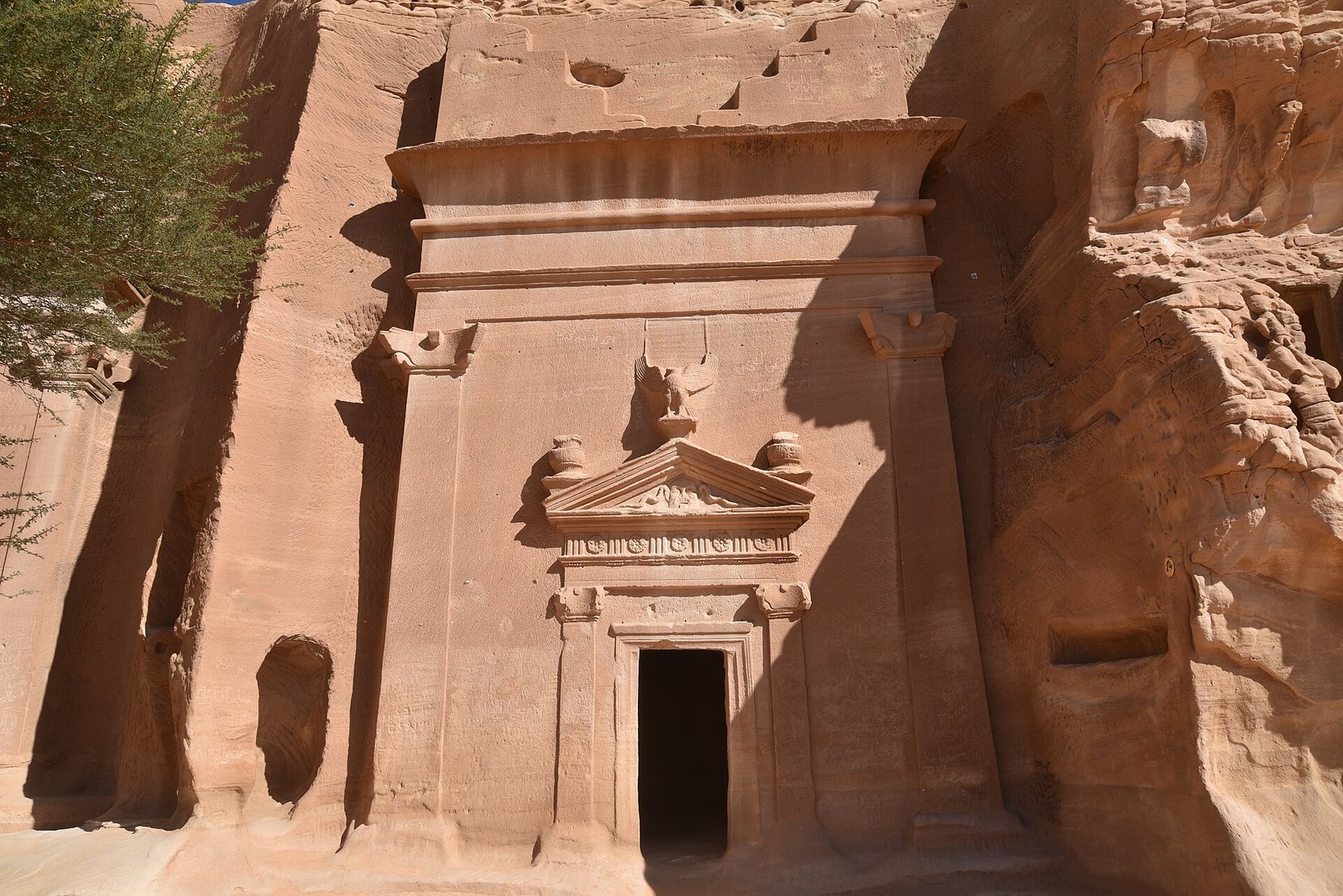
More than a hundred Nabataean tombs carved into sandstone near AlUla; the Kingdom's first World Heritage site.
The mud-brick birthplace of the first Saudi state, beautifully restored.
Coral-stone tower houses with carved wooden roshan balconies.
Thousands of petroglyphs at Jubbah and Shuwaymis.
One of the largest oases on earth, with millions of date palms.
Rock art and wells on an ancient caravan route in Najran.
Dunes and wildlife on the edge of the Empty Quarter, a natural site.
The remains of a caravan city, capital of the Kingdom of Kinda.
More in our Bahrain history and culture guide.
A coastal mound with 4,500 years of history and a Portuguese-era fort.
Oyster beds, merchant houses and the Pearling Path in Muharraq.
Thousands of burial mounds and royal tombs of the Dilmun civilization.
More in our Qatar history and culture guide.
A walled pearling and trading town of the 18th and 19th centuries, with its restored fort.
More in our United Arab Emirates history and culture guide.
Bronze Age tombs, falaj-watered oases and forts in the garden city.
Desert sites in Sharjah with more than 200,000 years of human presence; the UAE's second inscription.
Mountain wadis, waterfalls and rare wildlife in Fujairah, inscribed as a natural site in 2026; the UAE's third World Heritage site.
More in our Oman history and culture guide.
A vast mud-brick fort and walled oasis below the Jebel Akhdar.
Beehive tombs of the third millennium BC.
Frankincense trees and the ancient ports of Dhofar.
Water channels that still feed villages today.
A medieval port on the Indian Ocean, praised by Ibn Battuta and Marco Polo.
Listed by UNESCO as a separate entry, proposed by Jordan. See our Jerusalem holy city page.
Holy places of Judaism, Christianity and Islam within the Ottoman walls.
Listed by UNESCO under the State of Palestine. See Bethlehem and Hebron.
The ancient basilica and the historic route into Manger Square.
Stone terraces irrigated by ancient springs.
The old town around the Cave of the Patriarchs / Ibrahimi Mosque.
One of the oldest settlements in the world.
One of the earliest monasteries of the Holy Land.
Hilltop remains of ancient Samaria-Sebaste, inscribed in 2026.
Ultra-Luxury Real Estate · Own Here
Across the Middle East, the finest resorts and the finest homes now sit side by side, and many international buyers own before they ever visit.
Ultra-Luxury Tourism & Ultra-Luxury Real Estate
Checked October 2026. Prices and dates are approximate and can change. See our standard.