Persepolis
The ceremonial capital of the Achaemenid kings, with carved staircases and monumental gateways. A World Heritage Site.

Home›Culture›Timeline›Iran: History and Culture
Iran
Iran history is the story of Persia, one of the world's oldest continuous civilizations, from Persepolis to the turquoise domes of Isfahan. Persian culture gave the world poetry, gardens, carpets and a cuisine of saffron and rose, and its influence reaches from India to the Mediterranean.
At a glance
Eras of Iran history
The Elamites built the ziggurat of Chogha Zanbil more than three thousand years ago, and the ancient city of Susa is among the world's oldest. In the 6th century BC Cyrus the Great founded the Achaemenid Empire; the Cyrus Cylinder, often described as an early charter of tolerance, is one of history's most famous documents. Darius the Great built Persepolis, whose staircases are carved with delegations bringing gifts from across the known world.
The Parthians and then the Sasanians ruled for nearly a thousand years, building great vaulted palaces and spreading Persian art and statecraft. From the 7th century, Persia embraced Islam while keeping its language and culture, and Persian scholars such as Avicenna (Ibn Sina), al-Khwarizmi and Omar Khayyam led the Islamic Golden Age.
The Safavid dynasty made Isfahan its capital in the late 16th century, creating Naqsh-e Jahan Square, one of the largest city squares in the world, framed by tiled mosques and palaces. Later the Qajar era built the ornate Golestan Palace in Tehran. See the regional timeline and the region's former monarchies. Recent World Heritage inscriptions include the Persian Caravanserai (2023), ancient Hegmataneh, the Median capital beneath Hamadan (2024), the prehistoric sites of the Khorramabad Valley (2025) and Alamut Castle and its mountain fortifications (2026).
Languages and five useful
Persian (Farsi) is written in a form of the Arabic script but is an Indo-European language, a distant cousin of English. Azerbaijani, Kurdish, Luri, Gilaki, Arabic and Baluchi are also spoken.
| English | Local phrase | Say it like |
|---|---|---|
| Hello | Salaam | sah-LAHM |
| Thank you | Merci / Mamnoon | mair-SEE / mam-NOON |
| How are you? | Haletoon chetoreh? | hah-leh-TOON cheh-TOH-reh |
| Very beautiful | Kheili ghashangeh | KHAY-lee gha-shan-GEH |
| Happy New Year (Nowruz) | Nowruz mobarak | noh-ROOZ moh-bah-RAK |
Poetry is the heart of Persian culture. Ferdowsi's Shahnameh, the Book of Kings, preserved the Persian language; Hafez and Saadi are quoted in daily life, and the tombs of Hafez and Saadi in Shiraz are gardens of pilgrimage for readers; Rumi, born in the Persian-speaking world, is among the best-selling poets in America. Persian miniature painting, calligraphy and illumination reached exquisite heights.
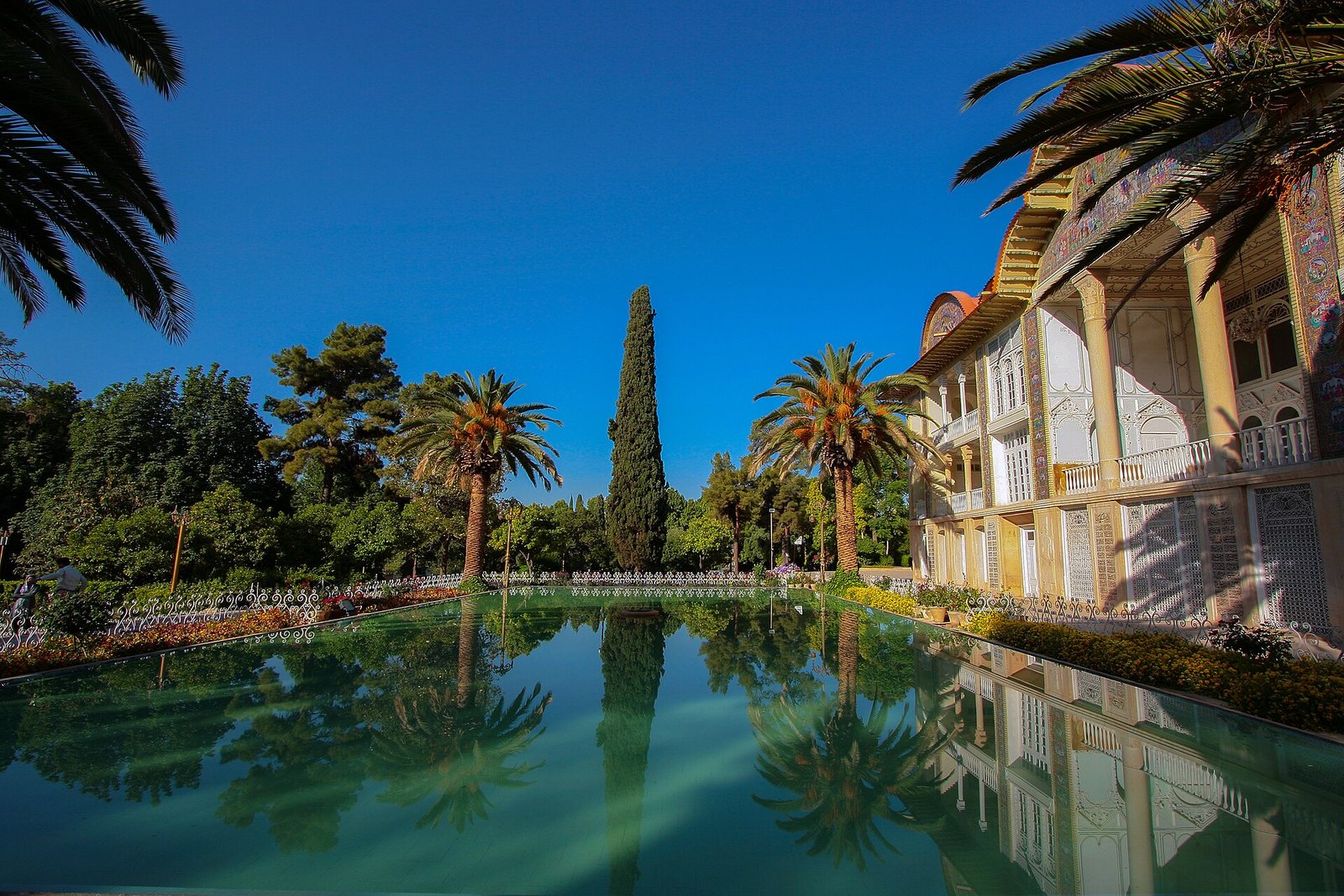
The Persian carpet is the world's most famous rug, with city weaves from Isfahan, Tabriz, Kashan and Qom and tribal kilims from nomadic peoples. The Persian garden, divided by water channels into four parts, became a model for gardens from Granada to the Taj Mahal, and nine are inscribed together by UNESCO. Discover more on Islamic art and architecture.
Persian food is subtle and fragrant. Saffron-tinted rice with a golden crust called tahdig is the pride of every cook. Fesenjan slow-cooks chicken in pomegranate and walnut, ghormeh sabzi is a stew of herbs, beans and dried lime, and kebab koobideh is served with grilled tomatoes and sumac.
Iran is the world's leading producer of saffron and a major grower of pistachios. Rosewater flavors ice cream called bastani, faloodeh is a chilled dessert of fine noodles, and tea is served from a samovar with sugar cubes. Learn about the region's love of scent on our perfume and oud page.
The ceremonial capital of the Achaemenid kings, with carved staircases and monumental gateways. A World Heritage Site.
A vast Safavid square framed by the Shah Mosque, Sheikh Lotfollah Mosque and Ali Qapu Palace.
Treasures from prehistoric Iran through the Islamic eras, including Achaemenid reliefs.
The Qajar royal complex, with mirrored halls and tiled courtyards. A World Heritage Site.
Called the Pink Mosque for its tiles; morning light through stained glass paints the floor in color.
Nowruz, the Persian New Year at the spring equinox, is celebrated with the haft-sin table of seven symbolic items, and on Yalda, the longest night, families stay up reading Hafez and eating pomegranates. Taarof, an elaborate code of courtesy, shapes everyday conversation. See our intangible heritage page.
The ancient qanat system of underground water channels, some thousands of years old, is a World Heritage Site. Backgammon and polo both have Persian roots. The word paradise comes from an old Persian word for a walled garden. Explore more on our Persian heritage and culture page and see Isfahan's heritage.
Ultra-Luxury Real Estate · Own Here
Across the Middle East, the finest resorts and the finest homes now sit side by side, and many international buyers own before they ever visit.
Ultra-Luxury Tourism & Ultra-Luxury Real Estate
Checked October 2026. Prices and dates are approximate and can change. See our standard.