Hagia Sophia
A masterpiece of Byzantine architecture that has served as a cathedral, a museum and today a mosque.

Home›Culture›Timeline›Türkiye: History and Culture
Türkiye
Türkiye history stretches from Göbekli Tepe, perhaps the world's oldest monumental site, to Byzantine Constantinople and Ottoman Istanbul. Turkish culture, from carpets and calligraphy to coffee and kebabs, turns any Türkiye vacation into a journey through twelve thousand years.
At a glance
Eras of Türkiye history
Göbekli Tepe, with its carved stone pillars about 11,500 years old, has rewritten ideas about the dawn of civilization, and Çatalhöyük is one of the earliest large towns. Anatolia was later home to the Hittites, with their capital at Hattusa, to the Phrygians of Gordion and to the Lydians of Sardis, credited with minting some of the first coins; Gordion (2023) and Sardis (2025) are now World Heritage Sites.
Greek cities lined the Aegean coast: Troy, Ephesus, Pergamon and Halicarnassus (Bodrum), whose Mausoleum was a Wonder of the Ancient World. In 330 AD Constantine made Byzantium his new capital, Constantinople, and the Byzantine Empire endured for over a thousand years, building Hagia Sophia in the 6th century.
The Seljuks brought Turkish culture to Anatolia from the 11th century, leaving caravanserais and Konya's Mevlana heritage. From 1453 Istanbul was the Ottoman capital, and architects such as Mimar Sinan filled it with domes and minarets. The Republic of Türkiye was founded in 1923 under Mustafa Kemal Atatürk, with Ankara as its capital. See our history timeline and our page on former monarchies.
Languages and five useful
Turkish uses the Latin alphabet, adopted in 1928, so signs are easy to read. English is common in Istanbul and resort areas.
| English | Local phrase | Say it like |
|---|---|---|
| Hello | Merhaba | MER-ha-ba |
| Thank you | Teşekkür ederim | teh-shek-KOOR eh-deh-RIM |
| Please / here you go | Lütfen / Buyurun | LUT-fen / BOO-yoo-roon |
| Enjoy your meal | Afiyet olsun | ah-fee-YET ol-SOON |
| Cheers! | Şerefe | sheh-reh-FEH |
Iznik tiles, glazed in cobalt, turquoise and coral red, cover the walls of the Blue Mosque and Topkapı Palace. Ebru, the art of marbling paper on water, and Turkish calligraphy are both recognized by UNESCO, and hand-knotted carpets and kilims from Anatolia are collected worldwide. See the bigger picture on Islamic art and architecture and Arabic calligraphy.
Music ranges from Ottoman classical makam to Anatolian folk on the bağlama, and the sema ceremony of the Mevlevi whirling dervishes is a profound experience. Orhan Pamuk, author of novels set in Istanbul, received the Nobel Prize in Literature. The Medieval Mosques of Anatolia, with their carved wooden columns and painted ceilings, were inscribed by UNESCO in 2023.
Turkish food is one of the world's great cuisines. Breakfast, kahvaltı, spreads cheeses, olives, honey, eggs and simit across the table. Mezes, grilled fish on the Bosphorus, Adana kebab, manti dumplings, and lahmacun are just the start, and the regional kitchens of Gaziantep and Hatay are renowned.
Baklava from Gaziantep, Turkish delight, and künefe end meals sweetly. Turkish coffee and its culture are on UNESCO's intangible heritage list, and tea, served in tulip glasses, flows all day. Browse our best restaurants page for Istanbul's finest tables.
A masterpiece of Byzantine architecture that has served as a cathedral, a museum and today a mosque.
The Ottoman sultans' palace, with the Harem, Treasury and sacred relics overlooking the Bosphorus.
Official site ↗Three museums holding the Alexander Sarcophagus and treasures from across the region.
Official site ↗The Library of Celsus, the Great Theater and terraced houses with frescoes. A World Heritage Site.
Monumental carved pillars older than Stonehenge and the pyramids, under a protective canopy.
The hammam ritual, the backgammon board in a cafe, and tea offered by shopkeepers are part of daily life. Nevruz greets spring, and the Kırkpınar oil-wrestling festival is one of the world's oldest continuously held sporting events. Hospitality runs deep: guests are offered cologne and Turkish delight on arrival, and a host will insist on one more glass of tea. Weddings begin with henna nights, newborns receive blue evil-eye beads for luck, and the call of the simit seller on a ferry crossing the Bosphorus is the soundtrack of Istanbul mornings. Read more about intangible heritage in the region.
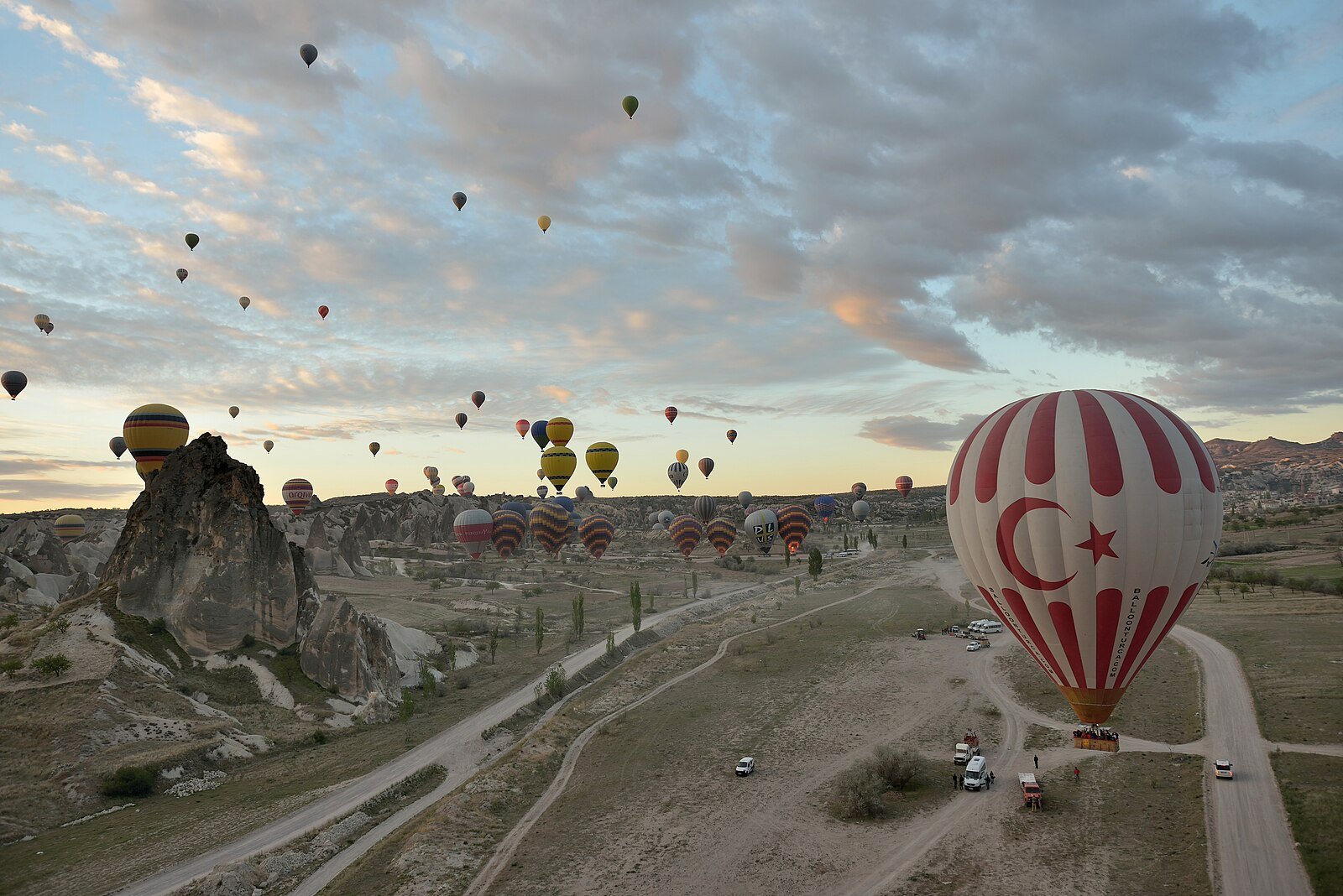
Istanbul is the only great city spread across two continents. Tulips were cultivated by the Ottomans long before they became a Dutch icon. Santa Claus's inspiration, Saint Nicholas, was bishop of Myra on the Turkish coast. Plan your trip with our Türkiye luxury travel guide, and stay on the Bosphorus in Istanbul or in a Cappadocia cave hotel.
Ultra-Luxury Real Estate · Own Here
The places you discover as a guest are the places to own. Open to citizens of most countries, including the United States, outside military and security zones.
Ultra-Luxury Tourism & Ultra-Luxury Real Estate
Checked October 2026. Prices and dates are approximate and can change. See our standard.