Jerusalem, Holy City of Three Faiths
The Western Wall, the Church of the Holy Sepulchre and the Haram al-Sharif / Temple Mount, with visiting hours and quiet etiquette. Read the Jerusalem guide.


Home›Culture›Faith and Heritage
Faith and Heritage
The Middle East holy sites of Judaism, Christianity and Islam sit within a day's drive of one another, and around them lies more World Heritage than almost anywhere on earth. This guide is the respectful way in: where to go, what to wear, when doors open and how to behave as a welcome guest.
At a glance
Abraham is honored as a forefather by Jews, Christians and Muslims alike, and the places tied to him and his descendants run in an arc from Iraq through the Levant to Arabia and Egypt. Our page on the shared Abrahamic heritage tells that story; the pages below take you to the places themselves.
Jerusalem holds sites sacred to all three faiths inside one walled Old City. Galilee, Bethlehem and the Jordan River draw Christian pilgrims. Makkah and Madinah are the two holiest cities in Islam, while great mosques from Casablanca to Muscat welcome visitors of every background. Jewish heritage reaches far beyond the Holy Land, from the island synagogue of Djerba to restored houses of worship in Cairo, Manama and Abu Dhabi.
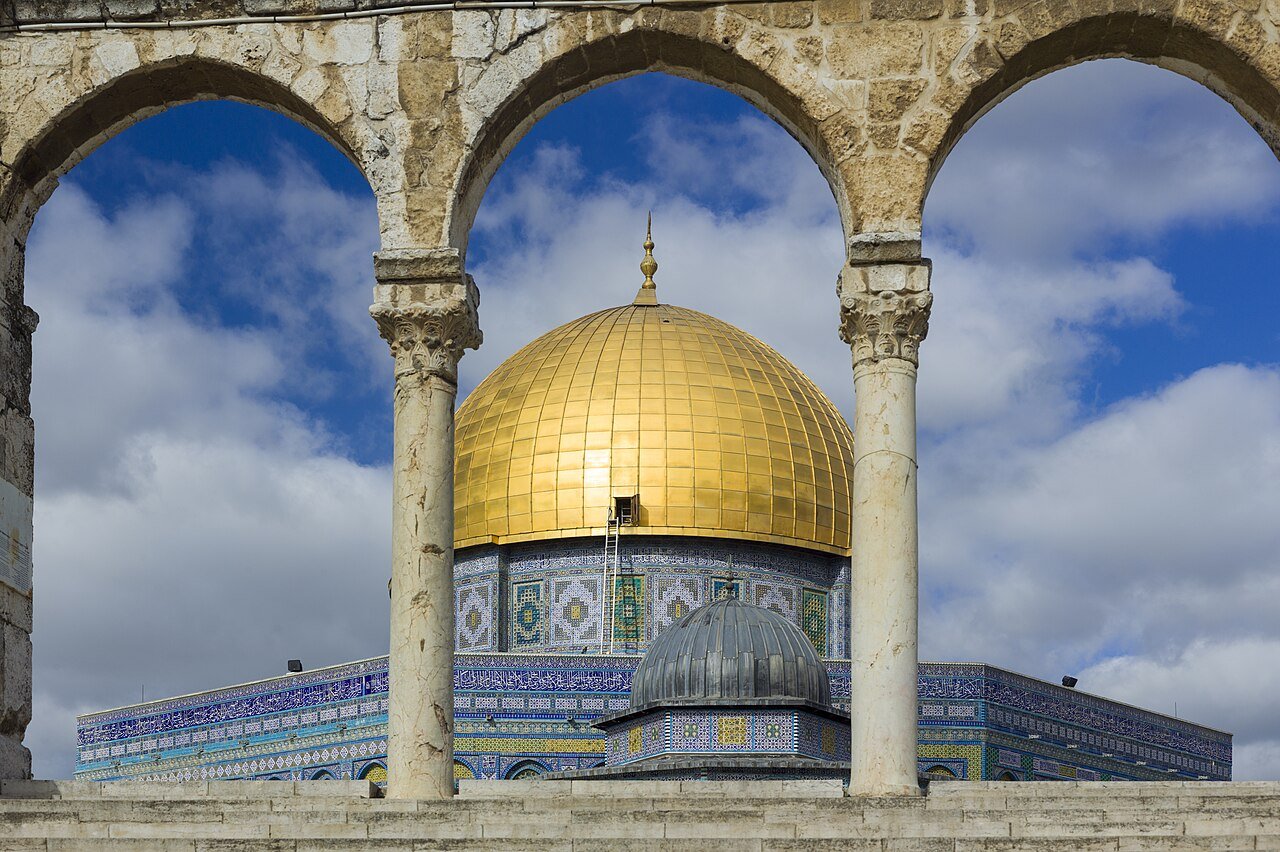
The Western Wall, the Church of the Holy Sepulchre and the Haram al-Sharif / Temple Mount, with visiting hours and quiet etiquette. Read the Jerusalem guide.
How Muslims from the United States plan Umrah and Hajj through Nusuk, the finest hotels facing the Grand Mosque, and the sites near Makkah that every traveler may visit. Plan a luxury Umrah.
From the Sheikh Zayed Grand Mosque to Hassan II in Casablanca and the Blue Mosque in Istanbul, the mosques that open their doors to visitors. See the great mosques.
Nazareth, the Sea of Galilee, the Baptism Site in Jordan, Mount Nebo, Saint Catherine's Monastery and the rock churches of Cappadocia. Discover Christian holy sites.
Safed, Tiberias, El Ghriba on Djerba, the mellahs of Morocco, Ben Ezra in Cairo and the new synagogue at the Abrahamic Family House. Visit Jewish heritage sites.
The Church of the Nativity and the Cave of the Patriarchs, presented under the Palestinian Territories. Bethlehem and Hebron holy sites.
Every inscribed World Heritage site across our 17 countries, grouped by country, from Petra and the Pyramids to Hegra and the Pearling Path. Browse the full list.
Arabic coffee, the majlis, falconry, Al Sadu weaving, henna and calligraphy: the traditions UNESCO lists as living heritage. Explore living heritage.
Dress code at religious
One rule covers almost every holy place in the region: cover shoulders and knees, and choose loose, opaque clothing. Women should carry a light scarf to cover the hair in mosques and at some Orthodox churches and the women's section of the Western Wall. Men wear long trousers rather than shorts. Many large mosques lend abayas and scarves at the door, but bringing your own is easier and more comfortable.
Remove shoes before entering a mosque prayer hall and carry them in the bag provided. At the Western Wall men cover their heads; paper kippot are offered at the entrance. Leave revealing sportswear, slogans and beachwear for the resort.
Opening hours and prayer-time
Mosques that welcome visitors usually close to non-worshippers for 30 to 90 minutes around each of the five daily prayers, and for most of Friday morning and midday. The Sheikh Zayed Grand Mosque, for example, welcomes visitors on Fridays from 9:00 to 11:30 am and again from 2:30 to 8:30 pm. Prayer times move with the sun, so check the day's timetable locally.
Churches hold services on Sunday mornings and on feast days, when sightseeing pauses. Synagogues and the Western Wall plaza observe the Sabbath from sunset Friday to nightfall Saturday, when photography and phones are not appropriate. During Ramadan, opening hours shift and many sites open later in the day; our holidays and national days guide lists the dates.
Speak softly, never walk in front of someone at prayer, and ask before photographing people. Couples keep displays of affection private. Eat and drink outside, and during Ramadan do not eat, drink or smoke in public by day in Muslim countries. Our wider customs and etiquette guide covers greetings, the right hand and hospitality.
Most important of all: Makkah is open only to Muslims, and the central area around the Prophet's Mosque in Madinah is reserved for Muslim worshippers. Everyone is welcome at the many heritage sites nearby, such as Historic Jeddah.
A private guide with a theology or archaeology background transforms a visit, and can time it around prayers and crowds. Many of our travelers add VIP airport arrival and a driver, then base themselves at a fine hotel nearby. For those who fall in love with a place, our pages on property near the great landmarks look at owning a home within reach of the region's heritage.
Ultra-Luxury Real Estate · Own Here
Across the Middle East, the finest resorts and the finest homes now sit side by side, and many international buyers own before they ever visit.
Ultra-Luxury Tourism & Ultra-Luxury Real Estate
Checked October 2026. Prices and dates are approximate and can change. See our standard.